
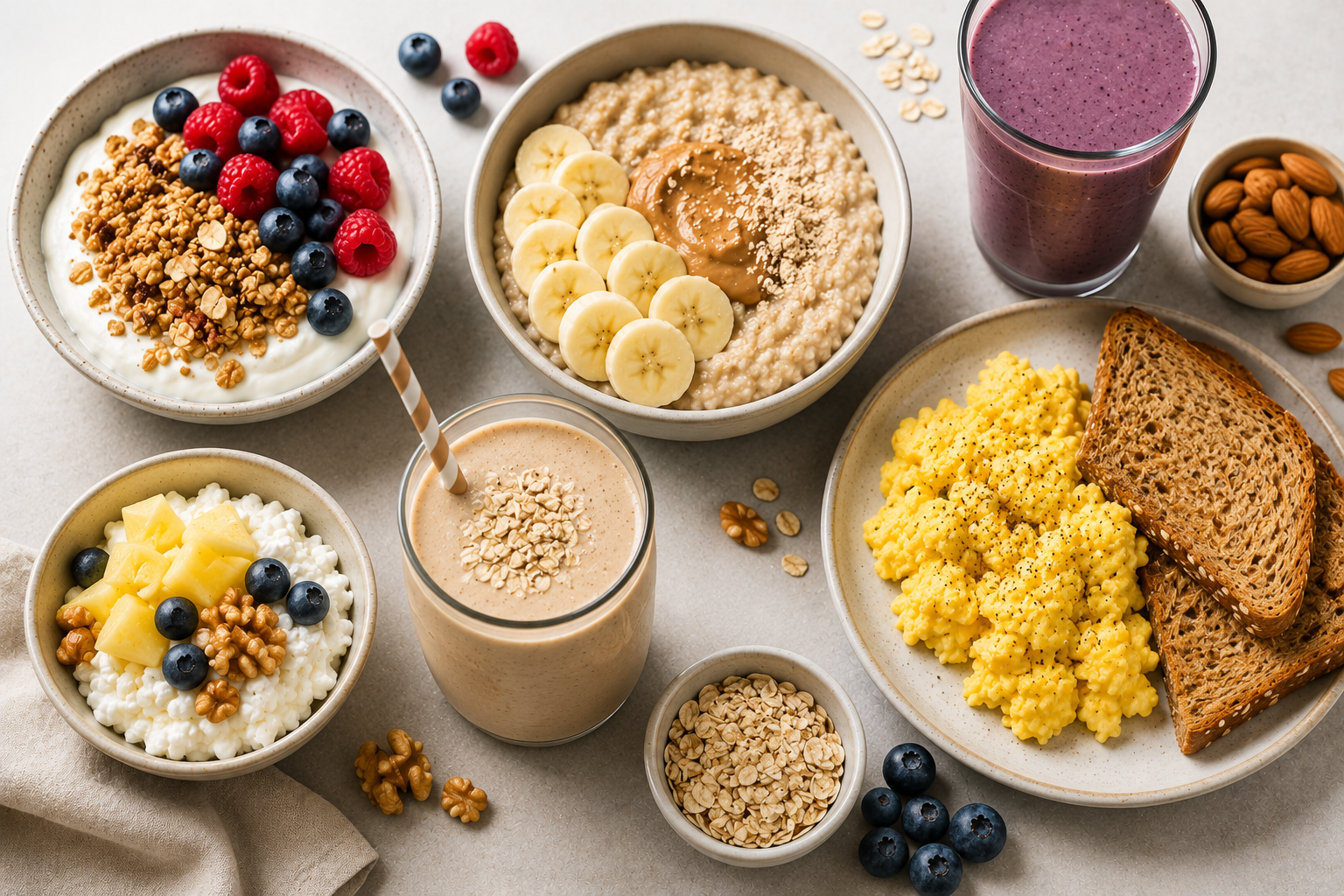
High-Protein Breakfast Ideas
Starting your day with a high-protein breakfast is one of the easiest ways to support muscle growth, stay full for longer and maintain steady energy levels throughout the morning. Whether your goal is building muscle, losing fat or simply eating healthier, choosing protein-rich breakfast foods can help you meet your daily nutrition goals with ease.
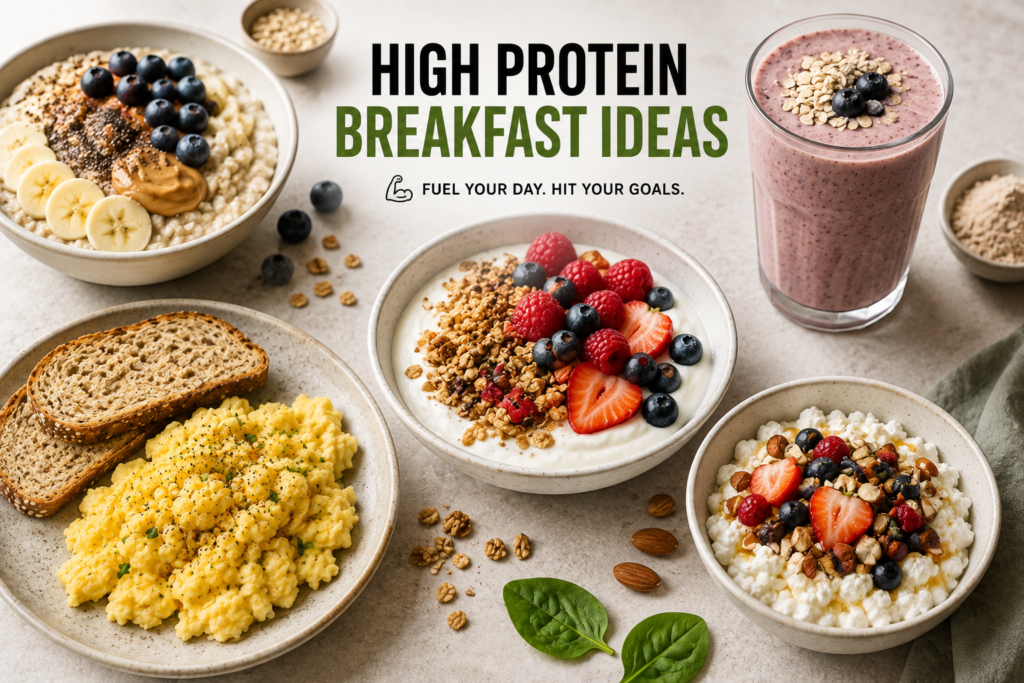
In this guide, you’ll discover simple high-protein breakfast ideas, easy recipes, practical meal prep tips and the best ingredients to create balanced, satisfying breakfasts for every lifestyle.
What Makes a Breakfast High in Protein?
A high-protein breakfast includes a quality source of protein that helps support muscle maintenance, recovery and long-lasting satiety. While there is no strict definition, most high-protein breakfasts provide at least 20–30 grams of protein per serving, making it easier to reach your daily protein target.
The best high-protein breakfasts combine protein-rich foods with complex carbohydrates, healthy fats and fiber to create balanced meals that provide sustained energy throughout the morning. Whole-food ingredients such as eggs, Greek yogurt, cottage cheese and oats can easily be combined into nutritious breakfasts that fit a wide range of dietary preferences and fitness goals.
Why Protein Matters at Breakfast
Starting your day with a protein-rich breakfast offers several benefits beyond simply increasing your daily protein intake. Protein helps support muscle maintenance and recovery, promotes satiety and provides a steady source of energy throughout the morning. This can help reduce mid-morning hunger and make it easier to stick to healthy eating habits.
For physically active individuals, eating enough protein at breakfast also contributes to meeting daily protein requirements and distributing protein intake more evenly throughout the day. Combined with regular resistance training, this can support muscle growth and recovery over time.
Quick Tip
Aim for at least 20–30 grams of protein at breakfast to support muscle maintenance, increase satiety and make it easier to reach your daily protein goal.
Key Components of a High-Protein Breakfast
A balanced high-protein breakfast includes more than just protein. Combining high-quality protein with complex carbohydrates, healthy fats and fiber creates a satisfying meal that provides sustained energy and supports overall health.
🥚 High-Quality Protein
Choose foods like eggs, Greek yogurt, cottage cheese or protein powder. They provide essential amino acids that support muscle growth and recovery.
🌾 Complex Carbohydrates
Include foods like oats, whole-grain bread, fruit or whole-grain cereals. They provide lasting energy and support performance throughout the morning.
🥑 Healthy Fats
Choose foods like nuts, seeds, avocado or natural nut butter each morning. They increase satiety and help create balanced, satisfying meals.
🍓 Fiber & Micronutrients
Add foods like berries, bananas, apples or fresh vegetables every day. They provide fiber, vitamins and minerals that support your overall health.
Best High-Protein Breakfast Ideas
A high-protein breakfast doesn’t have to be complicated. By combining a quality protein source with fiber-rich carbohydrates and healthy fats, you can create balanced meals that keep you satisfied and energized throughout the morning.
Whether you prefer sweet or savory breakfasts, the ideas below are easy to prepare and can be adapted to your personal taste and nutrition goals.
Greek Yogurt Bowl
Greek yogurt is one of the easiest ways to increase your protein intake at breakfast. Pair it with berries, oats and nuts for a balanced meal rich in protein, fiber and healthy fats.
| Per Serving | |
| 40 g Protein | 430 kcal |
| Main Ingredients | |
| Greek yogurt | Mixed berries |
| Whey protein | Granola |
Protein Oatmeal
Protein oatmeal combines slow-digesting carbohydrates with high-quality protein, making it an excellent breakfast before work or training.
| Per Serving | |
| 35 g Protein | 480 kcal |
| Main Ingredients | |
| Rolled oats | Low-fat milk |
| Whey protein | Banana |
| Peanut butter | Cinnamon |
Scrambled Eggs on Whole-Grain Toast
Scrambled eggs on whole-grain toast provide complete protein, complex carbohydrates and healthy fats for a balanced, satisfying breakfast.
| Per Serving | |
| 30 g Protein | 420 kcal |
| Main Ingredients | |
| Eggs | Whole-grain bread |
| Egg white | Cherry tomatoes |
| Baby spinach | Avocado |
Cottage Cheese Bowl
Cottage cheese is naturally rich in casein protein and pairs perfectly with fruit and nuts for a quick, nutritious breakfast.
| Per Serving | |
| 32 g Protein | 390 kcal |
| Main Ingredients | |
| Greek yogurt | Mixed berries |
| Cottage cheese | Almonds |
| Honey | Chia seeds |
🍳 Looking for More High-Protein Breakfast Recipes?
Discover dozens of healthy breakfast ideas, quick recipes and meal prep options in our complete breakfast collection.
Tips for Building a High-Protein Breakfast
Building a high-protein breakfast doesn’t have to be complicated. By following a few simple principles, you can create balanced meals that support muscle growth, keep you feeling full for longer and make it easier to reach your daily protein goals.
Aim for 20–30 g of Protein
Including around 20–30 grams of protein at breakfast is a practical target for most active adults. This helps support muscle maintenance, promotes satiety and contributes to meeting your daily protein requirements.
Choose Whole Foods First
Build your breakfast around nutrient-dense foods such as eggs, Greek yogurt, cottage cheese, skyr or oats. Whole foods provide protein along with essential vitamins, minerals and other nutrients that support overall health.
Add Fiber and Healthy Fats
Pair protein with fiber-rich foods like fruit or oats and healthy fats such as nuts, seeds or nut butter. This creates balanced meals that provide steady energy and help keep you satisfied until your next meal.
Prepare Breakfast in Advance
Preparing ingredients or complete breakfasts ahead of time makes it much easier to stay consistent during busy mornings. Options such as overnight oats, egg muffins or yogurt bowls can be made in advance and stored in the refrigerator.
Quick Tips
Quick Takeaway
A successful high-protein breakfast is simple, balanced and easy to repeat. Consistency matters far more than preparing complicated meals every morning.
Frequently Asked Questions
Final Thoughts
A high-protein breakfast is one of the simplest ways to support your health and fitness goals. By choosing quality protein sources and combining them with fiber-rich carbohydrates and healthy fats, you can create balanced meals that keep you satisfied, energized and on track throughout the day.
There is no single „perfect“ breakfast. The best choice is one that fits your lifestyle, preferences and daily routine while helping you consistently meet your protein needs. Start with simple ingredients, prepare meals in advance when possible and focus on building sustainable habits that you can maintain over the long term.
Whether your goal is building muscle, losing fat or simply eating healthier, making protein a priority at breakfast is a practical step toward long-term success.
Looking for more high-protein meal ideas?
Explore our related guides below to discover easy recipes, healthy snacks, meal prep tips and practical nutrition advice for every goal.
Related Guides
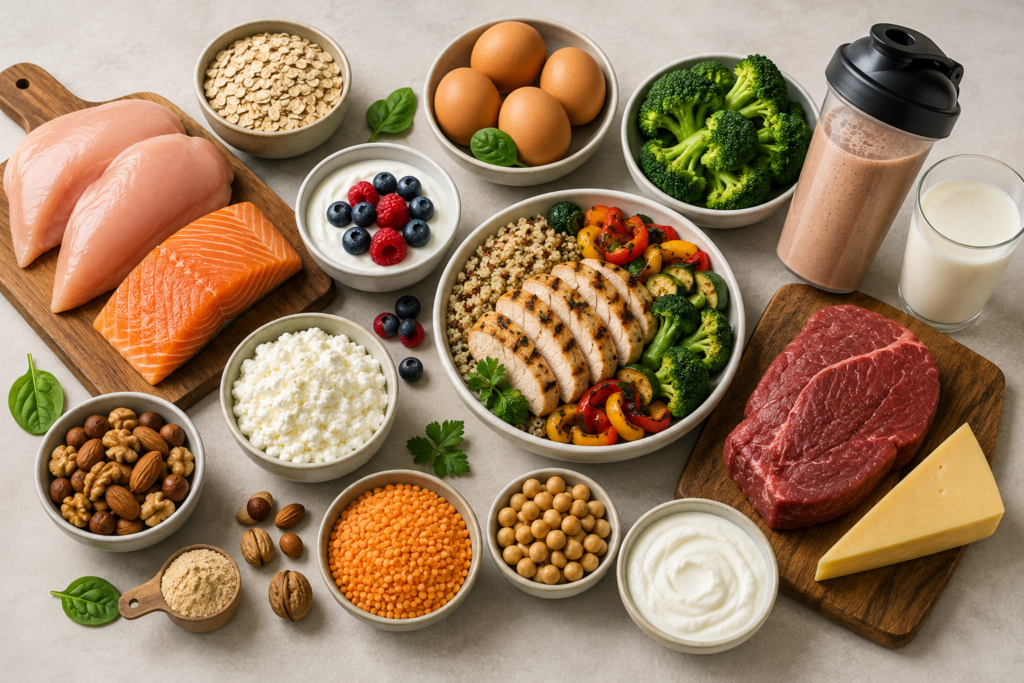
The Ultimate High-Protein Meal Guide
Learn everything you need to build a sustainable high-protein diet, meet your protein goals and support long-term health.
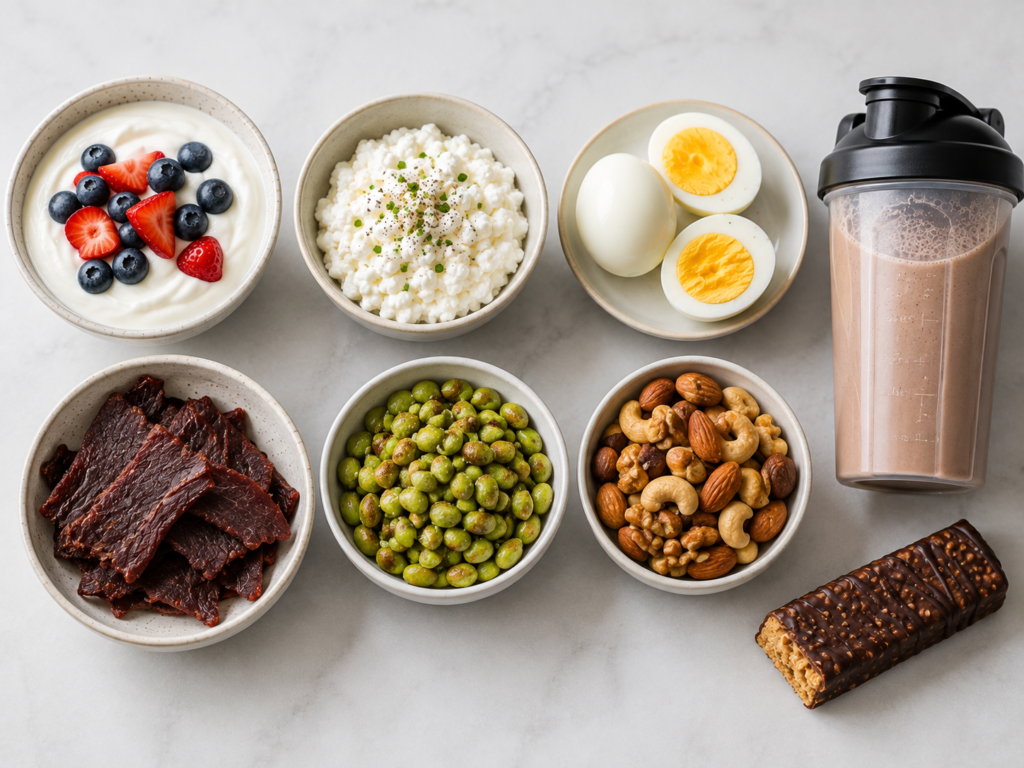
Best High-Protein Foods (2026)
Discover the best high-protein foods, compare protein sources and find the healthiest options for your fitness goals.