Find Your Daily Calorie Target.
Estimate how many calories you need each day based on your age, sex, height, weight, activity level and fitness goal.
Use your result as a practical starting point for fat loss, weight maintenance or muscle gain—and adjust it over time based on your real-world progress.
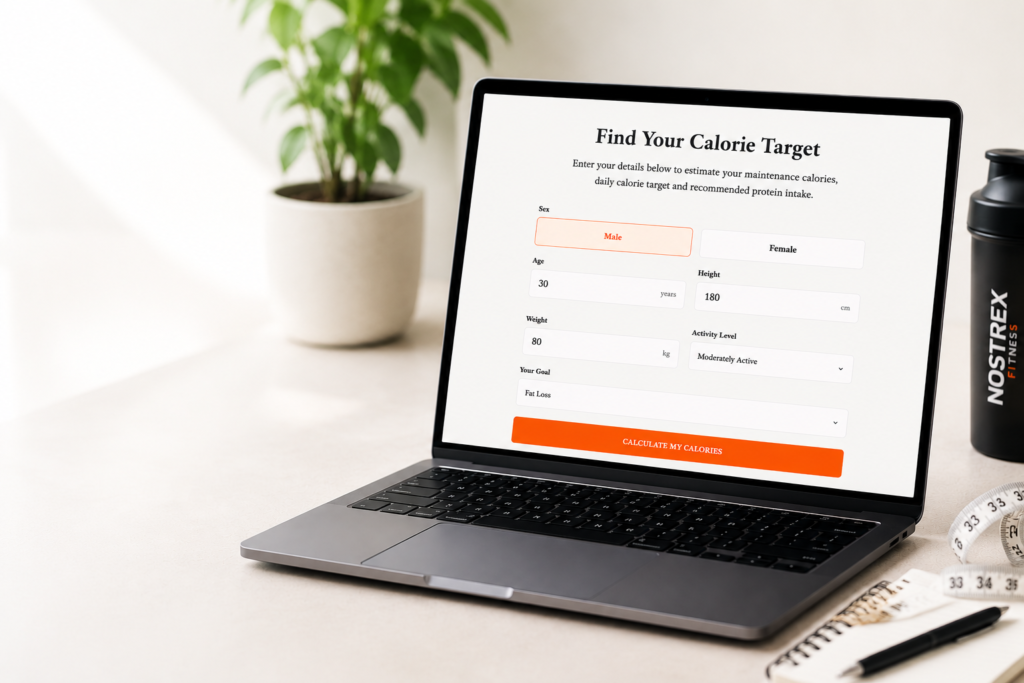
Find Your Calorie Target
Enter your details below to estimate your maintenance calories, daily calorie target and recommended protein intake.
These results are estimates and should be used as a starting point. Individual calorie needs can vary. Track your progress over several weeks and adjust your intake when necessary.
How Does the Calorie Calculator Work?
The calorie calculator estimates your daily energy needs in two steps. First, it calculates your basal metabolic rate (BMR)—the approximate amount of energy your body uses at rest. Your BMR is then adjusted based on your activity level to estimate your total daily energy expenditure (TDEE).
Your TDEE represents the approximate number of calories you need to maintain your current body weight. From there, your target can be adjusted depending on whether your goal is fat loss, maintenance or muscle gain.
Basal Metabolic Rate (BMR)
Your basal metabolic rate is the energy your body needs to support essential functions such as breathing, circulation, temperature regulation and organ function while at rest.
The Nostrex calculator uses the Mifflin–St Jeor equation, a widely used formula that estimates BMR using age, sex, height and body weight.
Total Daily Energy Expenditure (TDEE)
Your total daily energy expenditure includes your BMR plus the energy used through daily movement, exercise and other activities.
Because activity levels vary considerably between individuals, the calculator applies an activity factor to estimate your daily maintenance calorie needs.
| Activity Level | Description |
|---|---|
| Sedentary | Little exercise and mostly sedentary daily activity |
| Lightly Active | Light exercise or activity 1–3 days per week |
| Moderately Active | Moderate exercise or activity 3–5 days per week |
| Very Active | Hard exercise or activity 6–7 days per week |
| Extra Active | Very high training volume or highly active lifestyle |
How Many Calories Do You Need for Fat Loss?
Fat loss requires a sustained calorie deficit, meaning you consume fewer calories than your body uses over time.
Rather than dramatically reducing calorie intake, the calculator uses a moderate deficit as a practical starting point. For many people, approximately 10–20% below estimated maintenance calories can provide a sustainable range that supports gradual fat loss while leaving enough energy for training, recovery and everyday life.
Your ideal deficit depends on your starting point, activity level, body composition and individual preferences.
Fat Loss Starting Point
Maintenance calories − approximately 10–20%
Monitor your average weight trend for several weeks before making adjustments.
How Many Calories Do You Need to Build Muscle?
Building muscle requires resistance training, sufficient protein and enough energy to support recovery and growth.
While a large calorie surplus isn’t necessary, eating slightly above maintenance can make it easier to support muscle gain. A modest surplus of around 5–10% above maintenance calories can provide a practical starting point for many people.
The goal is to gain weight gradually rather than increasing calories aggressively.
Muscle Gain Starting Point
Maintenance calories + approximately 5–10%
How Many Calories Do You Need to Maintain Your Weight?
Your estimated maintenance calories represent the amount of energy you may need to keep your body weight relatively stable over time.
Because calorie calculators are only estimates, your actual maintenance intake may be slightly higher or lower. Track your calorie intake and average body weight for several weeks to determine whether your estimate matches your real-world needs.
How Much Protein Do You Need?
Protein plays an important role in muscle maintenance, recovery and satiety. Your ideal intake depends on your body weight, activity level and fitness goals.
For many active adults, approximately 1.6–2.2 grams of protein per kilogram of body weight per day provides a useful general range.
Not sure how much protein you need?
Read our Ultimate High-Protein Guide for a complete breakdown of protein intake, food sources and meal planning.
Your Calorie Target Is a Starting Point
No calorie calculator can determine your exact energy needs. Formulas provide an estimate based on population averages, while your real-world calorie requirements are influenced by factors such as body composition, daily movement, training and individual metabolism.
Use your calculated calorie target consistently for several weeks and monitor your average body-weight trend.
If your weight is moving in the expected direction, your target is working. If nothing changes despite consistent adherence, make a small adjustment rather than completely changing your plan.
CALCULATE → TRACK → REVIEW → ADJUST
Frequently Asked Questions
Final Thoughts
A calorie calculator can provide a useful starting point for understanding how much energy your body may need each day. Whether your goal is losing fat, maintaining your weight or building muscle, your estimated calorie target can help you create a more structured nutrition plan.
Remember that no formula can determine your exact calorie needs. Use your result as an initial estimate, follow it consistently and evaluate your progress over several weeks before making adjustments.
Combine an appropriate calorie intake with sufficient protein, nutritious foods, regular physical activity and habits you can maintain long term. Consistency matters more than finding a theoretically perfect calorie number.
Turn Your Numbers Into a Plan
Learn how to combine calories, protein, nutrition and training to reach your goals with a sustainable approach.
Related Guides
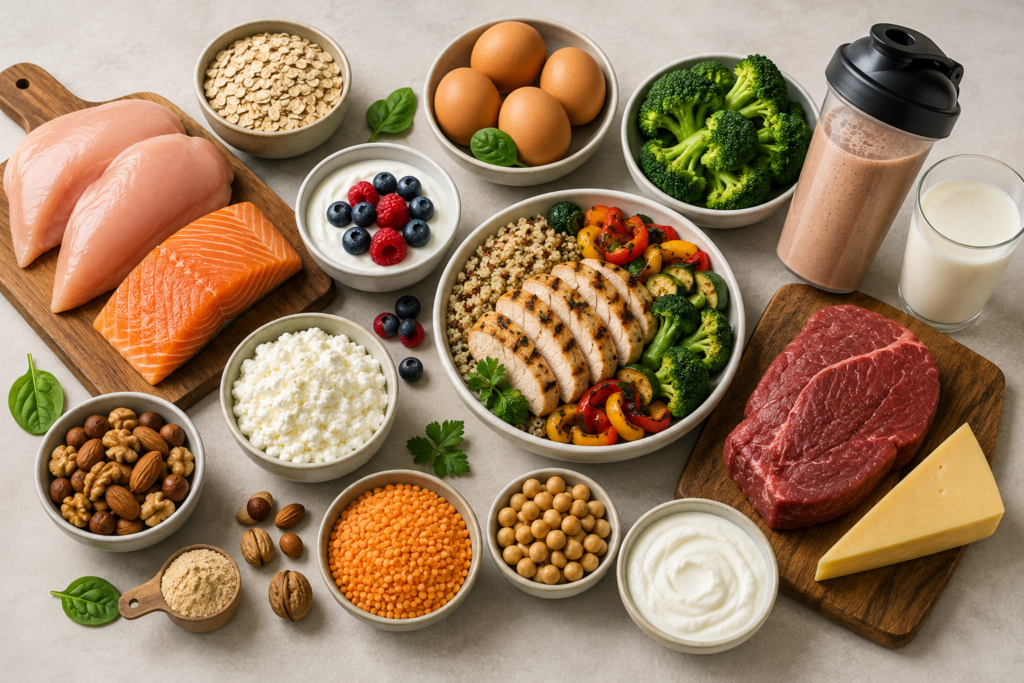
The Ultimate High-Protein Meal Guide
Learn everything you need to build a sustainable high-protein diet, meet your protein goals and support long-term health.
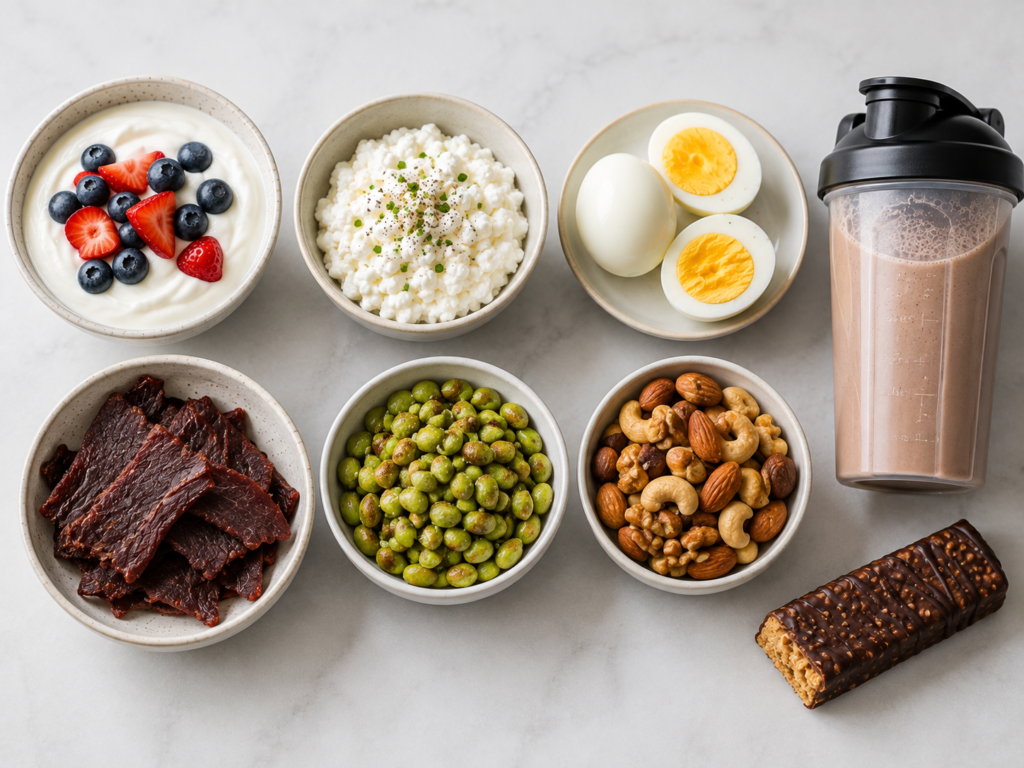
Best High-Protein Foods
Discover the best high-protein foods, compare protein sources and find the healthiest options for your fitness goals.
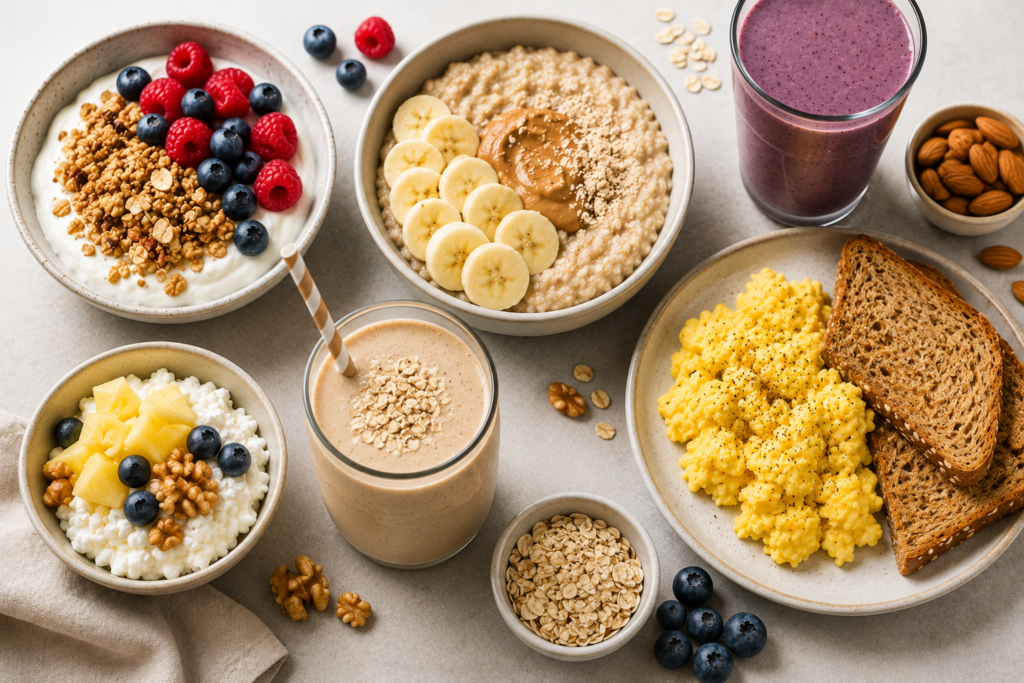
High-Protein Breakfast Ideas
Discover easy high-protein breakfast ideas to stay full, energized and support your fitness goals.
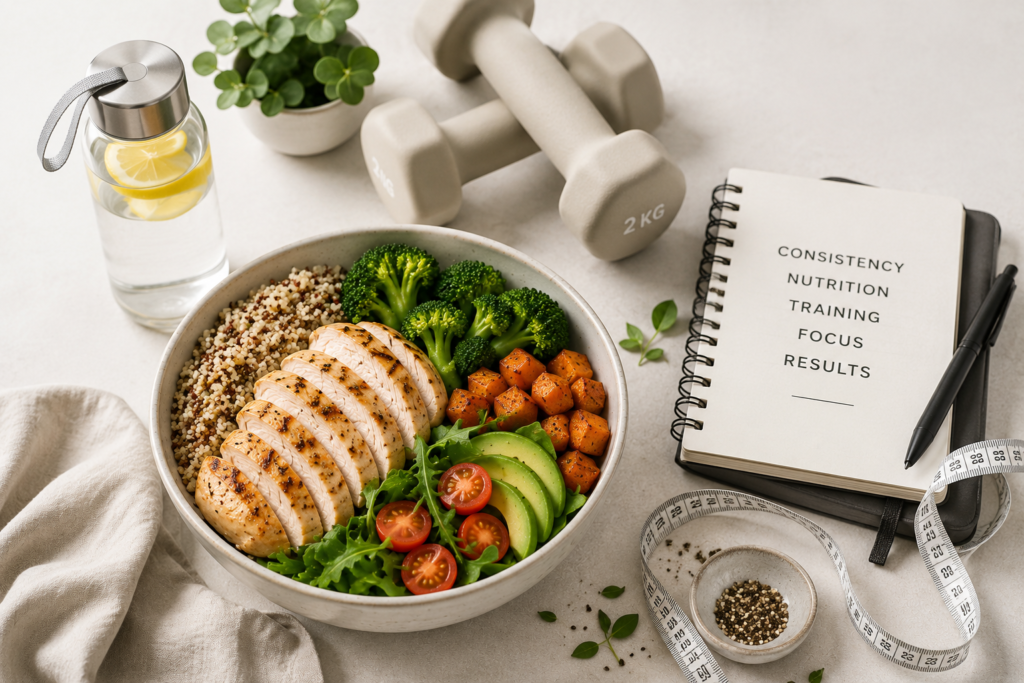
The Ultimate Fat Loss Guide
Discover practical fat loss strategies to lose body fat, preserve muscle and reach your fitness goals.