
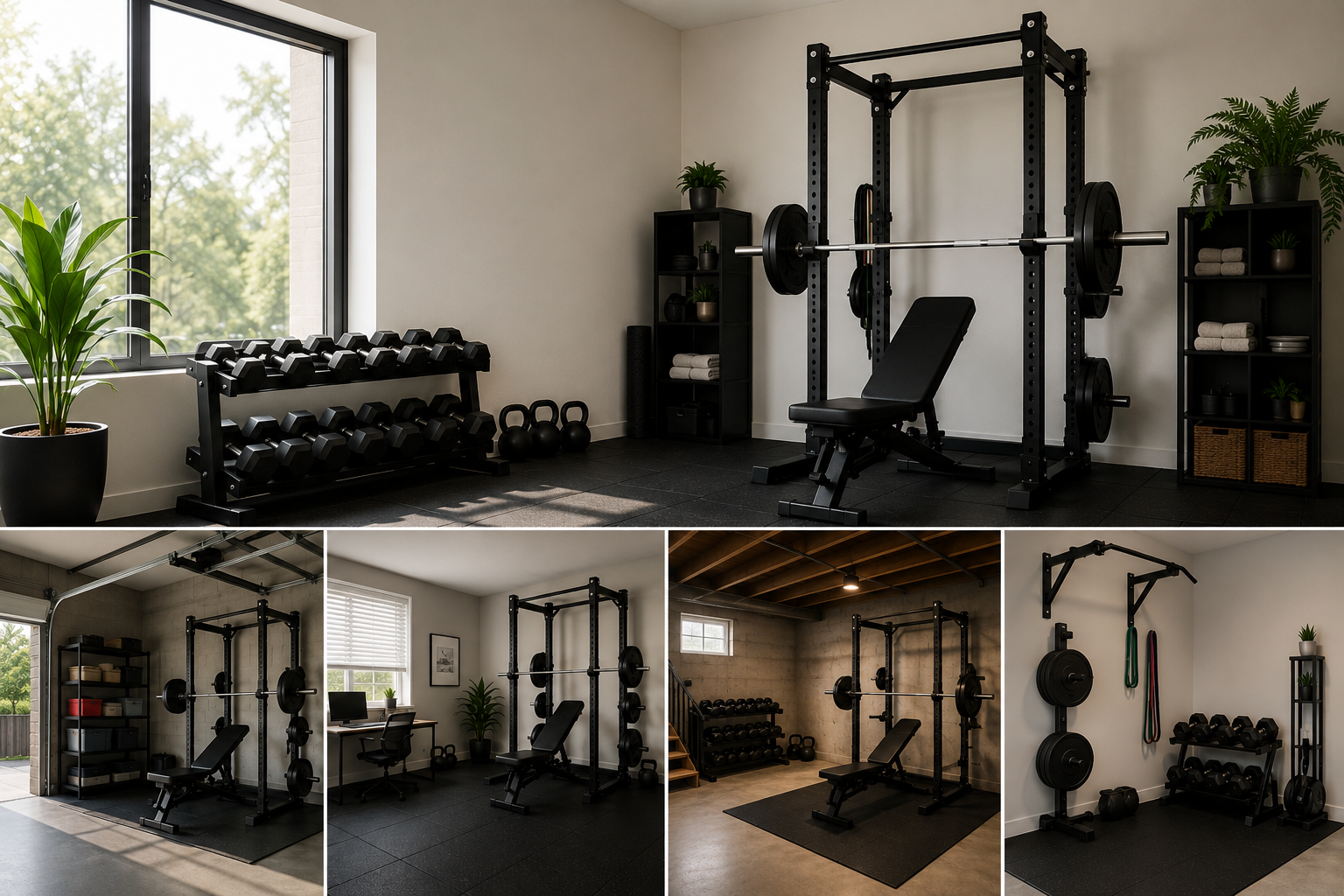
The Ultimate Home Gym Guide for Beginners
Everything you need to build a functional home gym – from choosing the right equipment and flooring to planning your budget and maximizing your training space.
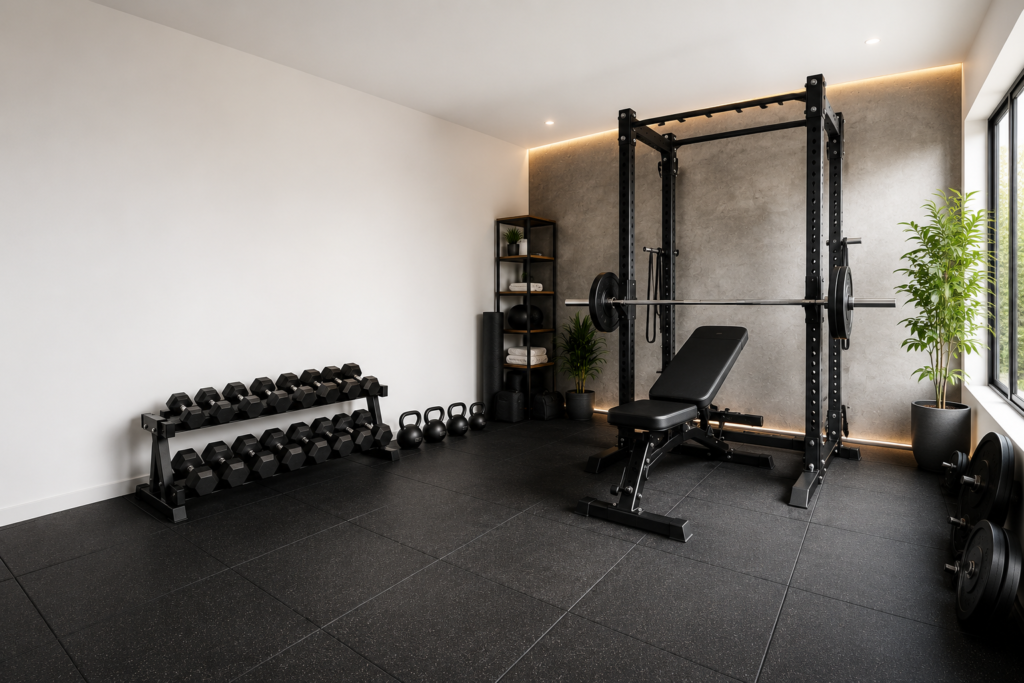
Why Build a Home Gym?
One of the biggest advantages of a home gym is convenience. Instead of commuting to a commercial gym, waiting for equipment, or adjusting your schedule around opening hours, you can train whenever it suits you.
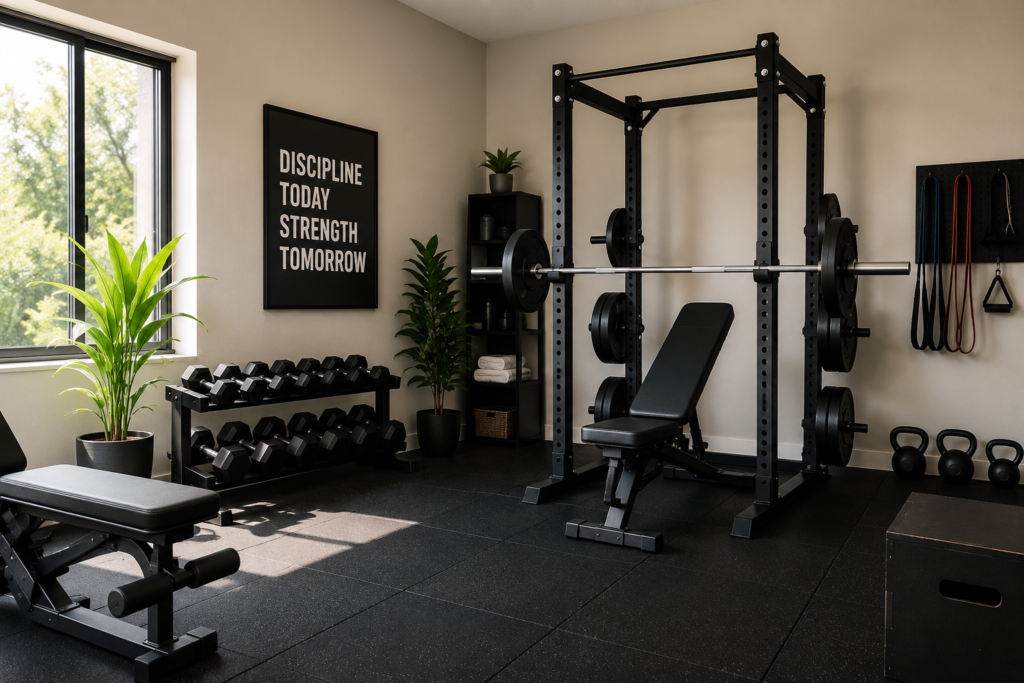
Even short workouts become much easier to fit into a busy day. A home gym can also save money over time. While the initial investment may seem significant, quality equipment lasts for many years and often costs less than several years of gym membership fees. Plus, you own the equipment permanently and can upgrade it gradually as your training needs evolve.
Another major benefit is consistency. Removing common barriers—such as travel time, crowded facilities, or bad weather—makes it easier to stick to your routine. The easier it is to start a workout, the more likely you are to stay consistent, and consistency is one of the biggest factors in achieving long-term fitness results.
Beyond convenience, a home gym gives you complete control over your training environment. You decide the music, temperature, equipment setup, and workout schedule. Whether you prefer early morning sessions or late-night training, your gym is always available.
Key Benefits of a Home Gym
Choosing the Right Space
Choosing the right location is the first step toward building a home gym you’ll actually enjoy using. The good news is that you don’t need a large dedicated room to create an effective workout space.
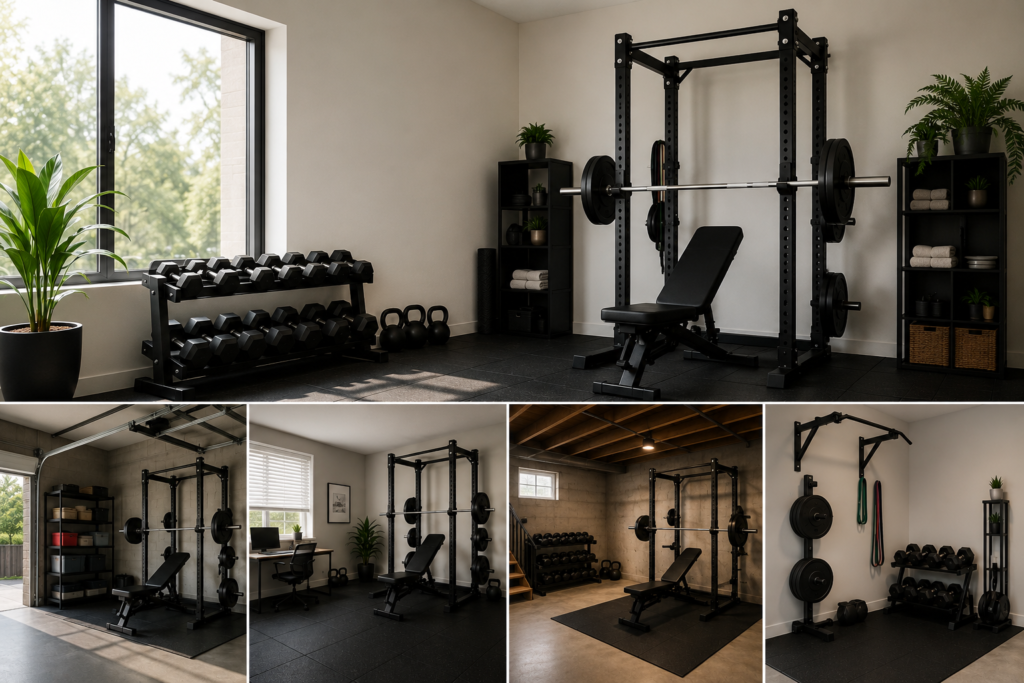
With the right planning, almost any area can become a functional gym. Many people successfully train in a garage, basement, spare bedroom, or even a small corner of their apartment. The best location depends on your available space, budget, and fitness goals. Larger areas offer room for equipment like power racks and barbells, while smaller spaces can still support highly effective workouts with adjustable dumbbells, resistance bands, and a weight bench.
Before purchasing equipment, take a few minutes to evaluate your training space. Consider the available floor area, ceiling height, ventilation, lighting, and noise levels. If you plan to perform overhead exercises or install taller equipment, make sure you have enough vertical clearance. It’s also worth thinking ahead—choosing a layout that leaves room for future upgrades can save both time and money as your home gym grows.
Finally, don’t overlook the importance of proper flooring. Protecting your floor with rubber mats not only reduces noise and absorbs impact but also creates a safer and more comfortable training environment. Even a simple setup can feel like a professional gym when the space is well planned.
Key Factors When Choosing a Space
Essential Home Gym Equipment
Building a home gym doesn’t mean buying every piece of equipment you see online. In fact, the best home gyms are built around a few versatile essentials that allow you to perform a wide variety of exercises.
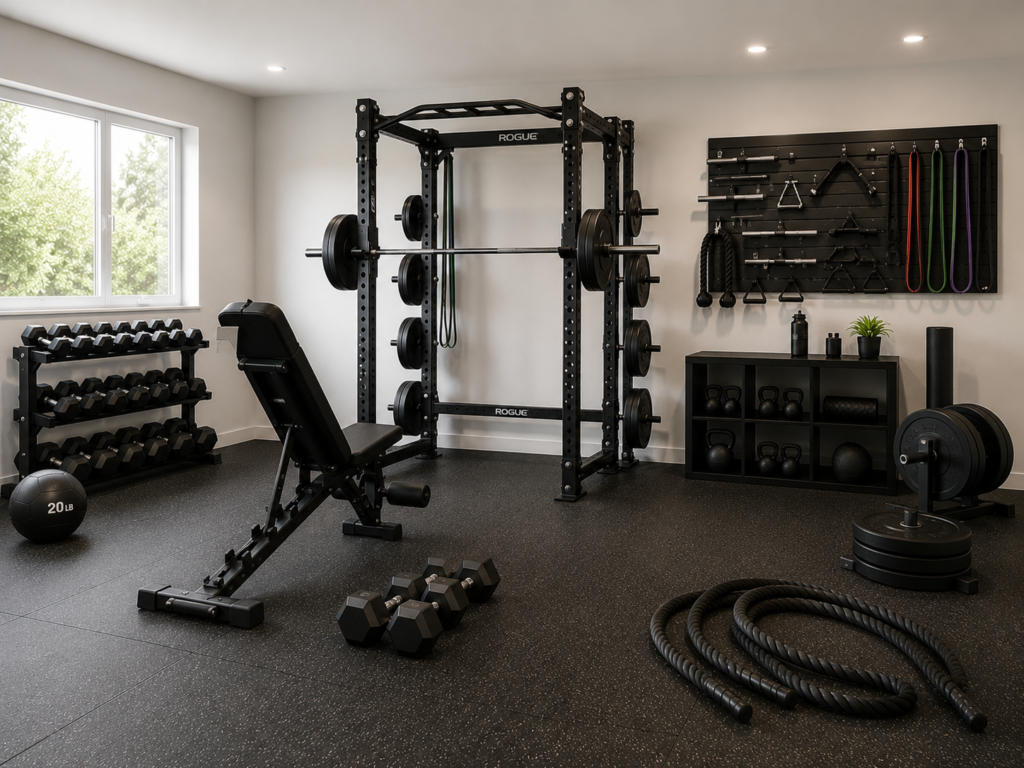
Starting with high-quality basics not only saves money but also gives you the flexibility to expand your setup over time. If you’re just getting started, focus on equipment that delivers the greatest training value. A small selection of well-chosen items is often more effective than a room full of machines that rarely get used. Prioritizing compound exercises and progressive overload will help you build strength, muscle, and overall fitness far more efficiently.
For most beginners, a combination of adjustable dumbbells, a sturdy weight bench, resistance bands, and proper flooring is enough to perform hundreds of effective exercises. As your experience grows, you can gradually invest in larger pieces of equipment such as a power rack, barbell, weight plates, or a cable machine.
Rather than trying to build your dream gym overnight, think of your home gym as an investment that grows with your fitness journey. Buying durable, versatile equipment from the start often provides better long-term value than replacing cheaper alternatives later.
Essential Equipment
Upgrade
Optional
Key Benefits of a Home Gym
Home Gym Flooring
Choosing the right flooring is one of the most overlooked aspects of building a home gym. While many beginners focus on buying equipment first, proper flooring protects your home, reduces noise, improves safety, and helps extend the lifespan of your equipment.
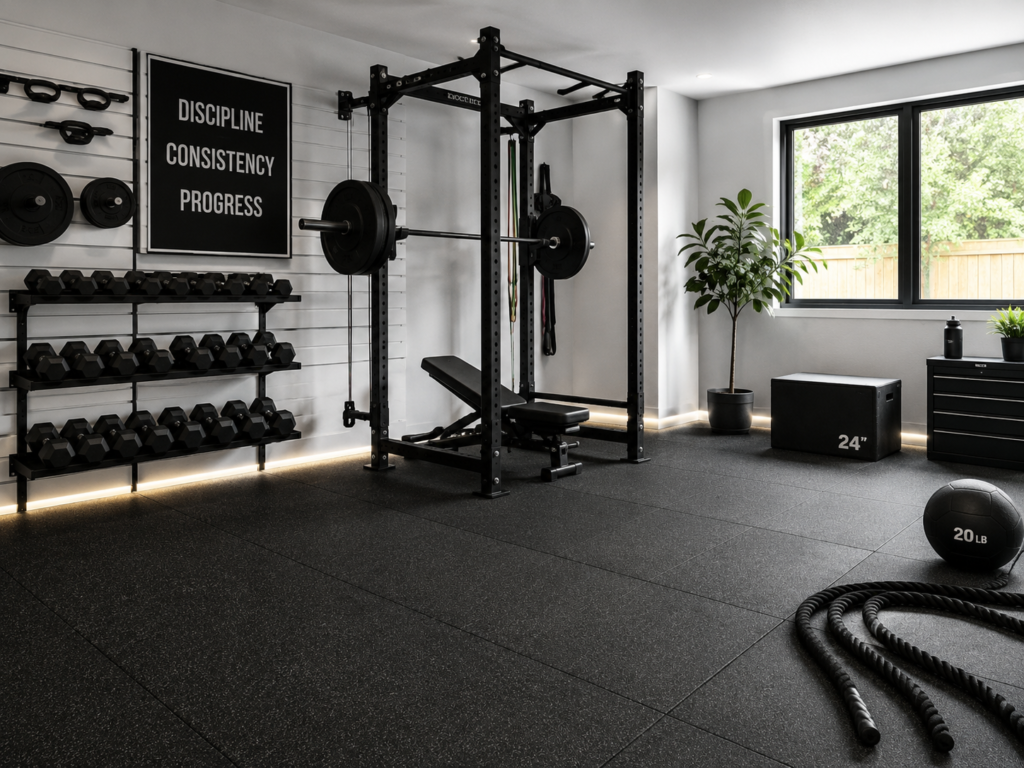
Rubber flooring is the most popular choice for home gyms because it offers excellent durability, shock absorption, and grip. Whether you’re lifting weights, performing bodyweight exercises, or using cardio equipment, a quality rubber surface creates a more stable and comfortable training environment.
The type of flooring you need depends on your training style. Heavy strength training often requires thicker rubber mats to absorb impact from dropped weights, while lighter workouts can be supported with thinner rubber flooring or interlocking tiles.
Although flooring may seem like a small investment, it’s one of the best upgrades you can make before purchasing expensive equipment. Protecting your floor from day one can save costly repairs later while making every workout quieter and more enjoyable.
What to Look for in Home Gym Flooring
Choose the Right Gym Flooring
Compare rubber mats, tiles and rolls to find the best flooring for your home gym.
How Much Does a Home Gym Cost?
One of the biggest misconceptions about building a home gym is that it requires a huge budget. In reality, you can create an effective training space for almost any price range.
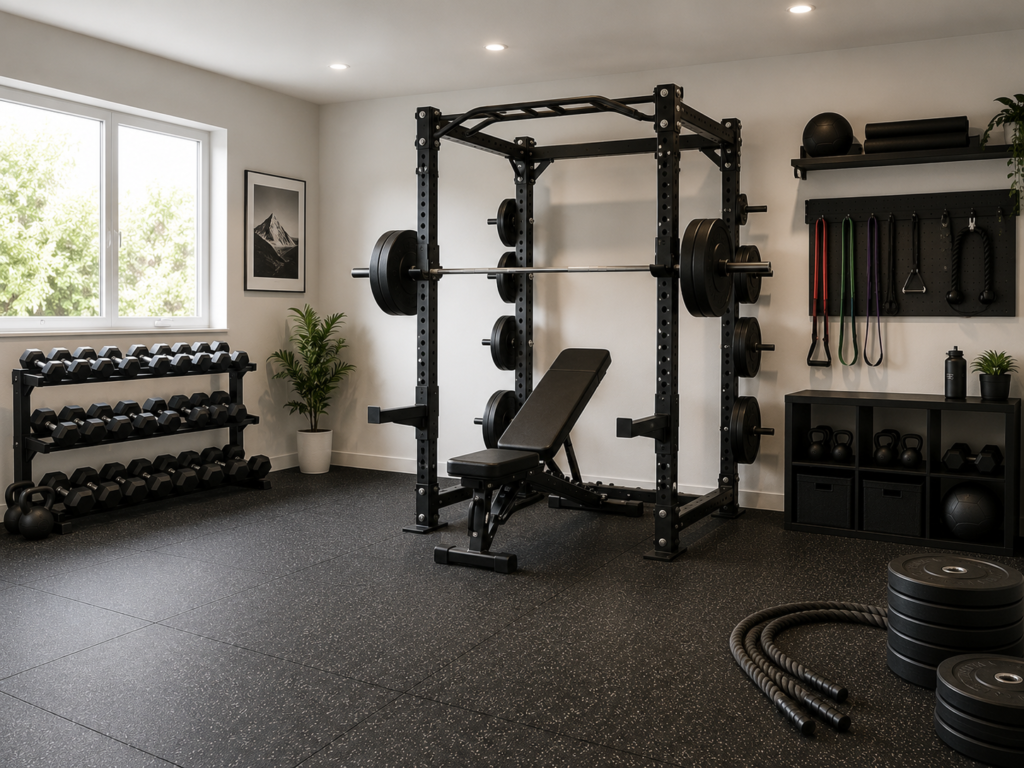
The key is focusing on versatile equipment that delivers the greatest value rather than buying everything at once. Your total investment depends on your fitness goals, available space, and the type of equipment you choose. Beginners often start with a few essential pieces and gradually expand their gym over time. This approach not only spreads out the cost but also allows you to invest in higher-quality equipment as your needs evolve.
For most people, a well-planned home gym quickly becomes more cost-effective than paying for a commercial gym membership year after year. Quality equipment can last for many years, making it a worthwhile long-term investment in your health and fitness.
Instead of asking, “How much should I spend?”, a better question is, “What equipment will I actually use every week?” Prioritizing frequently used items helps maximize both your budget and your training results.
Starter Home Gym
($ 300 – 700)
Perfect for beginners and small spaces.
Intermediate Home Gym
($ 800 – 2.000)
Ideal for serious strength training.
Advanced Home Gym
($ 2.500 +)
Designed for a complete home gym.
Money-Saving Tips
Ready to Build Your Home Gym?
Looking for equipment I personally recommend?
Home Gym Layout Tips
A well-designed home gym isn’t just about the equipment you own—it’s about creating a space that makes training comfortable, safe, and motivating. Even a small room can become an effective workout area with the right layout.
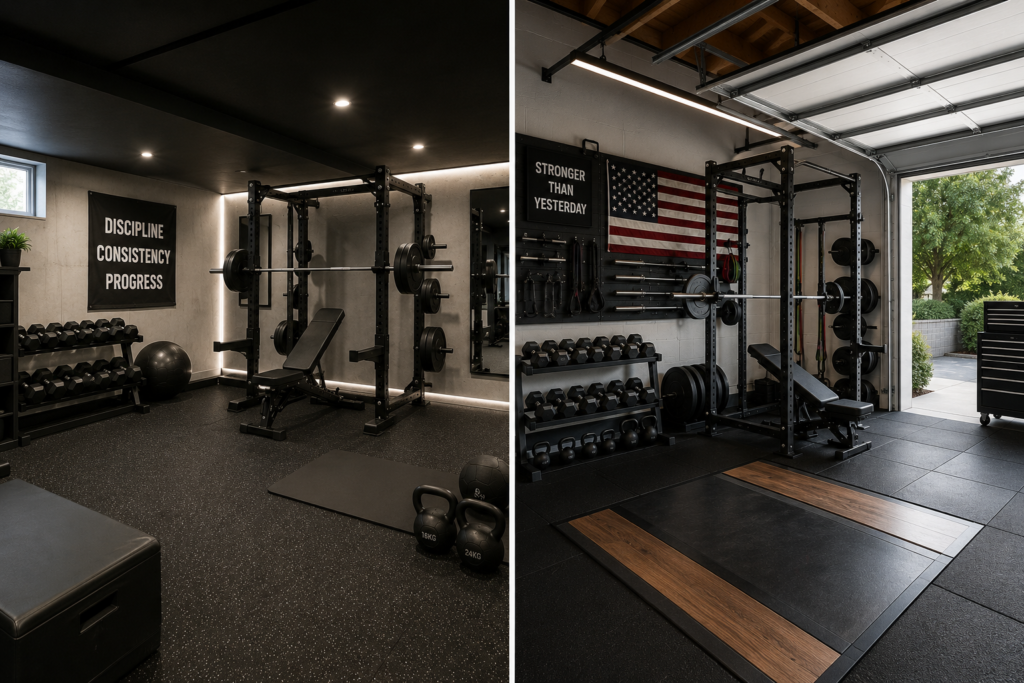
Start by placing your largest equipment first, such as a power rack, bench, or cardio machine. These items determine how the rest of your gym will be organized. Make sure there is enough clearance around each piece of equipment so you can move freely during your workouts.
Storage is another important factor. Keeping weight plates, dumbbells, resistance bands, and accessories organized not only makes your gym look cleaner but also improves safety by reducing clutter on the floor.
Good lighting, proper ventilation, and a large mirror can make your training space feel bigger and more inviting. These simple additions improve the overall workout experience and help you maintain proper exercise technique.
Finally, think about future growth. Leave enough space to add new equipment over time instead of filling every available corner from the beginning. A flexible layout allows your home gym to evolve as your training goals change.
Home Gym Layout Checklist
Common Home Gym Mistakes to Avoid
Building a home gym is an exciting project, but many beginners make costly mistakes that can easily be avoided with proper planning.
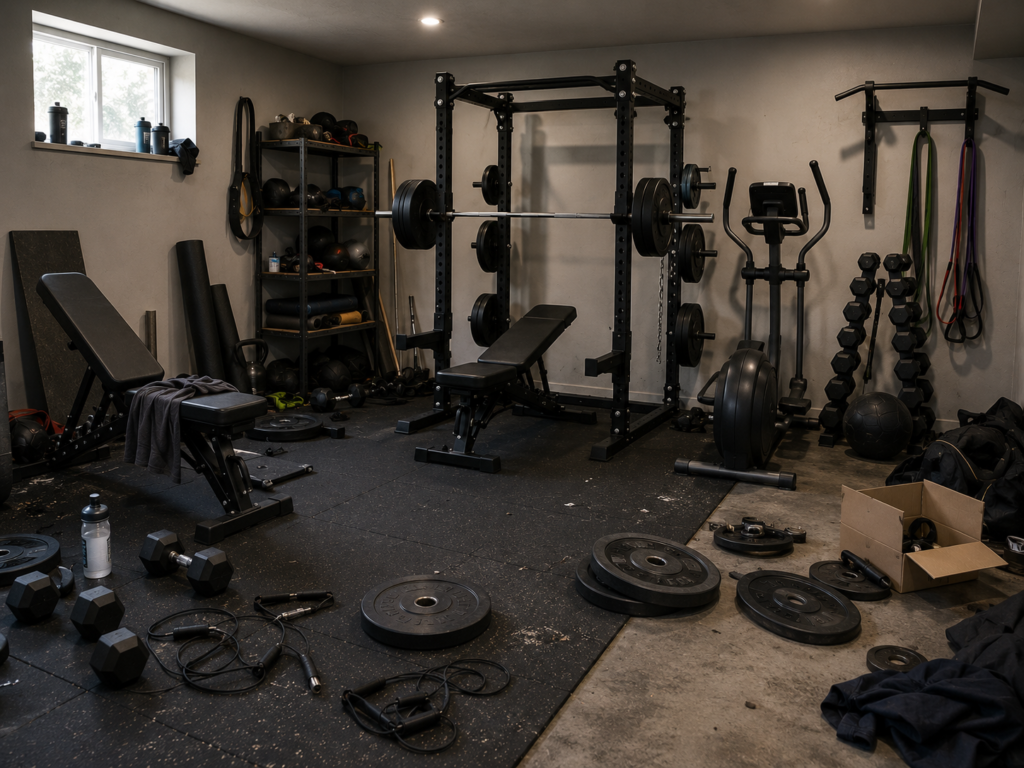
Focusing on the right priorities from the start will help you save money, maximize your training space, and create a gym that you’ll actually enjoy using for years. One of the most common mistakes is buying too much equipment too soon. While it’s tempting to fill your space with machines and accessories, most beginners only need a few versatile pieces of equipment to perform effective full-body workouts.
Another frequent mistake is ignoring the available space. Purchasing large equipment without measuring the room can lead to a cramped layout that limits movement and reduces the overall training experience.
Many people also underestimate the importance of flooring, storage, and ventilation. These elements may seem less exciting than buying new equipment, but they significantly improve safety, organization, and comfort.
Finally, remember that building a home gym is a long-term process. Start with the essentials, train consistently, and expand your setup gradually as your goals and experience evolve.
Avoid These Beginner Mistakes
Final Thoughts
Building a home gym doesn’t happen overnight, and it doesn’t have to. The best home gym is the one that matches your goals, your available space, and your budget. By starting with essential equipment, planning your layout carefully, and investing in quality over quantity, you can create a training environment that supports years of consistent progress.
Whether you’re setting up a small apartment gym or building a fully equipped garage gym, remember that consistency matters far more than having every piece of equipment on day one. Start simple, train regularly, and upgrade your space as your fitness journey evolves.
A well-planned home gym is more than just a collection of equipment—it’s an investment in your health, convenience, and long-term success.
Frequently Asked Questions (FAQ)
Ready to Build Your Home Gym?
Download the free Home Gym Starter Guide and discover the essential equipment, budget tips, and setup recommendations to build your ideal training space with confidence.
Related Articles
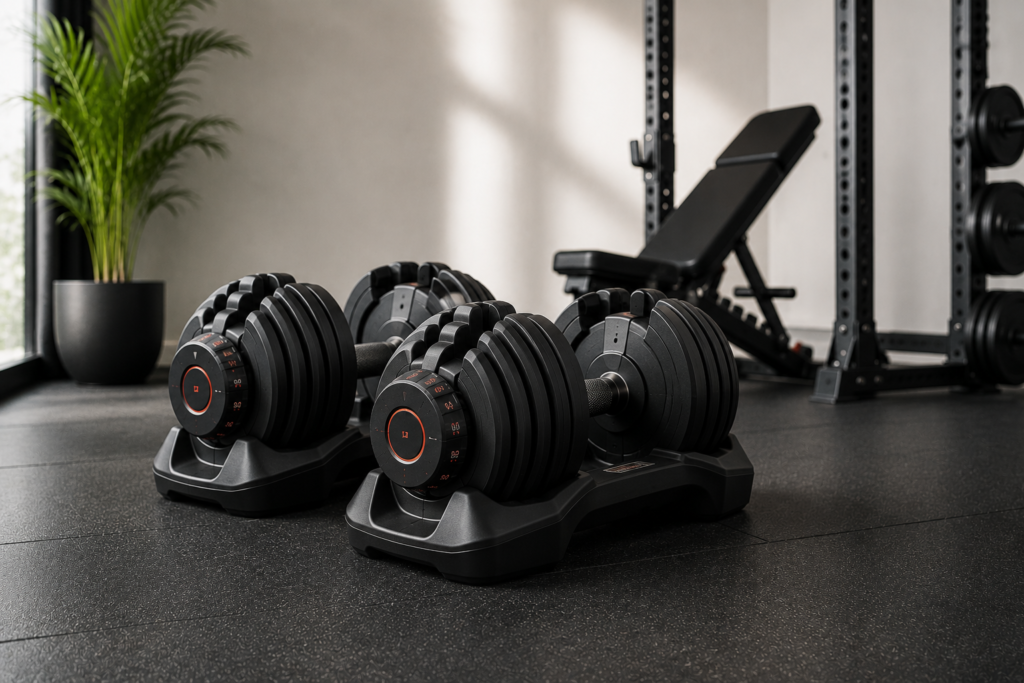
Best Adjustable Dumbbells for Home Gyms
Learn how to compare adjustable dumbbells and choose the right pair for your training goals.
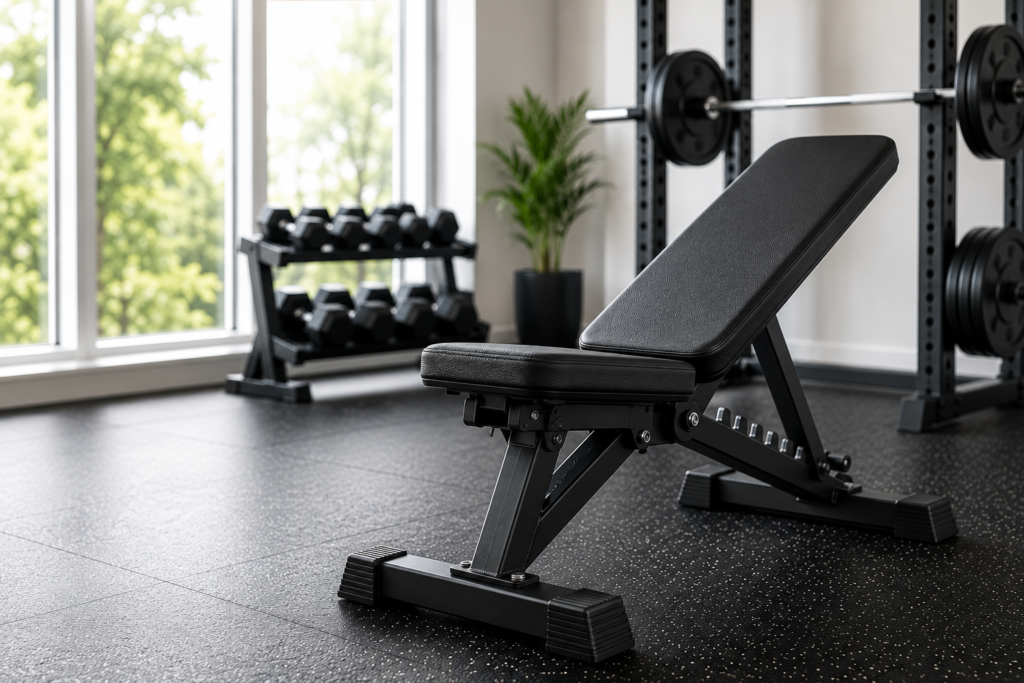
Best Weight Benches for Home Gyms
Compare the best weight benches to find the perfect fit for your home gym.
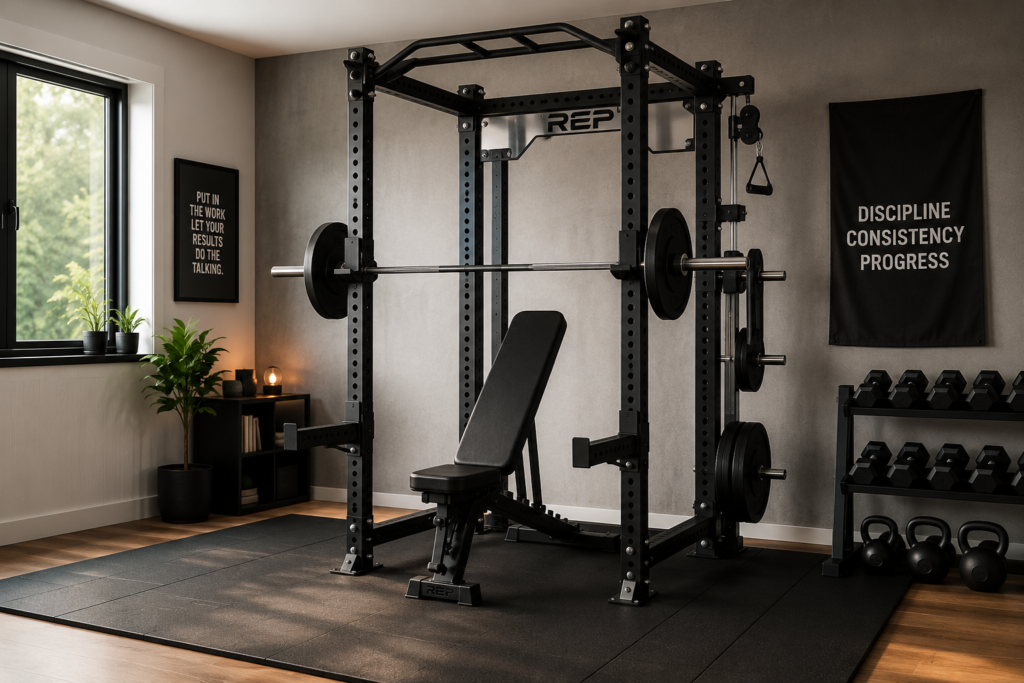
Best Power Racks for Home Gyms
Compare the best power racks to find the perfect model for your home gym, training style, and budget.