The Ultimate High-Protein Meal Guide
Protein is one of the most important nutrients for building muscle, losing fat and maintaining a healthy body. But with countless foods, diets and conflicting advice online, it can be difficult to know where to start.
The Ultimate High-Protein Meal Guide brings everything together in one place.
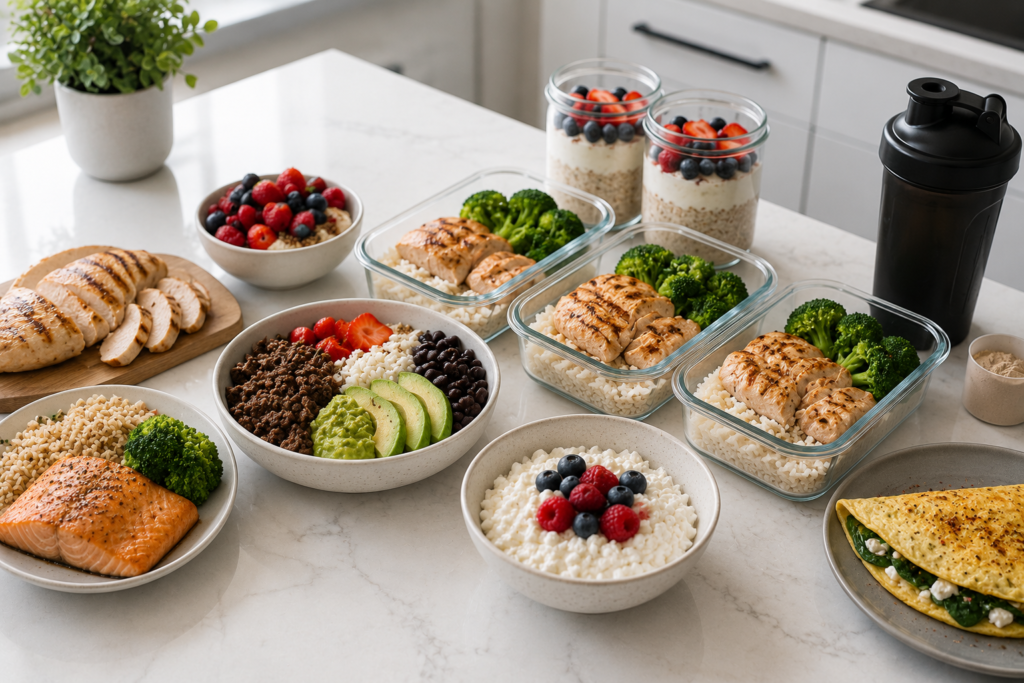
You’ll learn how much protein you actually need, discover the best high-protein foods, explore simple meal ideas and recipes, avoid common mistakes, and find practical strategies to make hitting your daily protein target easier than ever.
Whether your goal is muscle gain, fat loss or simply eating healthier, this guide will help you build a sustainable high-protein diet that fits your lifestyle.
Why a High-Protein Diet Matters
💪 Build Muscle
Support muscle growth with protein-rich meals that fuel training, recovery and long-term strength.
🔥 Support Fat Loss
Stay fuller for longer, reduce cravings and preserve lean muscle while losing body fat.
⚡ Recover Faster
Provide your body with essential nutrients to repair muscles and perform better every day.
🥗 Eat Healthier
Build balanced eating habits with simple, nutritious meals that fit any lifestyle and goal.
What Is a High-Protein Diet?
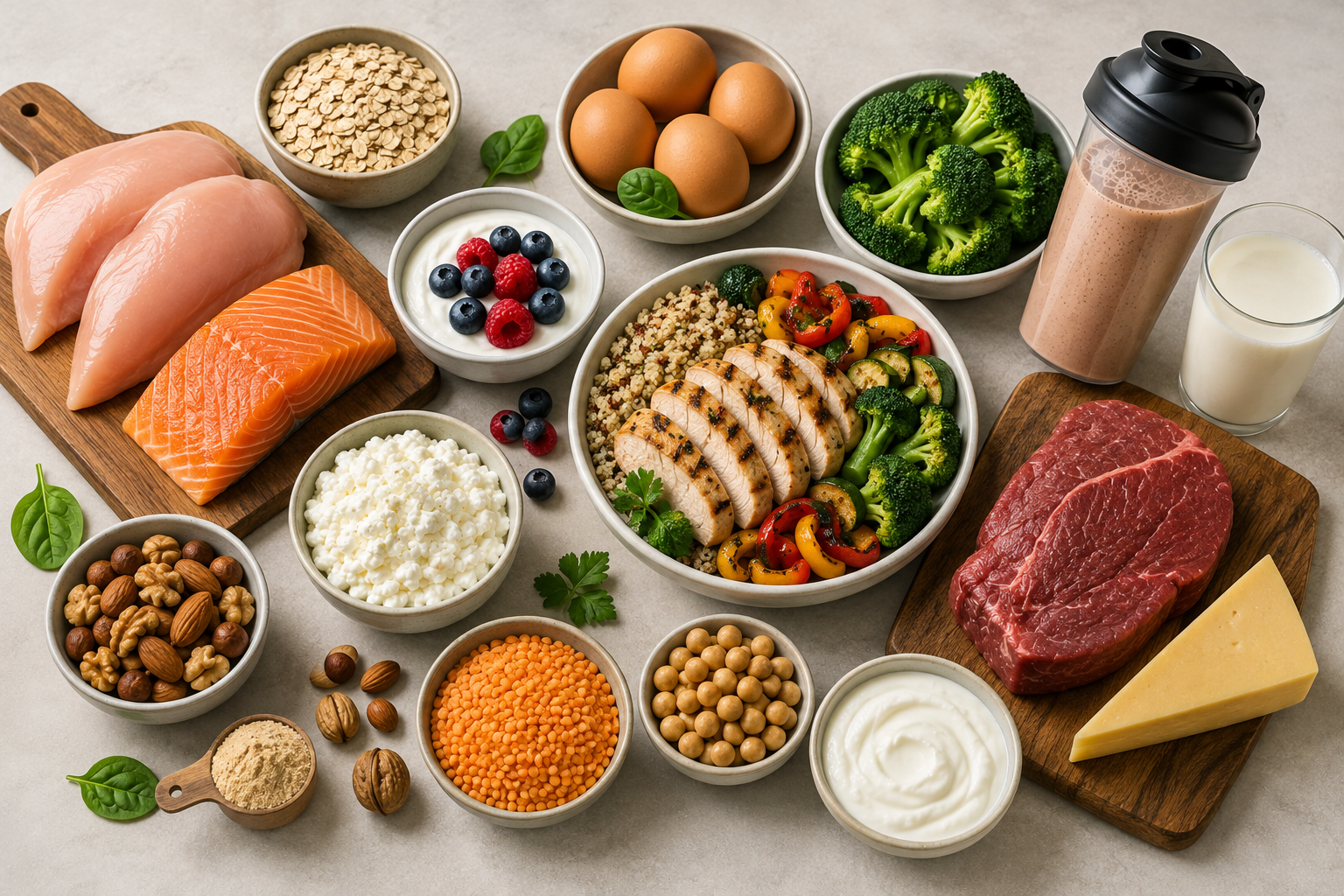
A high-protein diet is an eating approach that prioritizes protein-rich foods to help support muscle growth, recovery, fat loss and overall health. While carbohydrates and healthy fats remain important, protein becomes the primary focus of each meal to ensure your body gets the nutrients it needs.
Protein is found in both animal and plant-based foods, including lean meat, fish, eggs, dairy products, legumes, tofu and protein supplements. By choosing high-quality protein sources and spreading your intake throughout the day, you can make it easier to reach your nutrition goals without following a restrictive diet.
A high-protein diet isn’t just for athletes or bodybuilders. It can benefit anyone looking to improve body composition, stay fuller for longer, support an active lifestyle or simply build healthier eating habits.
Key Characteristics of a High-Protein Diet
💪 Protein at Every Meal
Include a quality protein source with every meal and snack to support muscle maintenance and recovery.
🥩 Whole Food Focus
Prioritize lean meats, dairy, eggs, legumes and other minimally processed protein sources whenever possible.
🥗 Balanced Nutrition
Combine protein with healthy fats, fiber and complex carbohydrates for satisfying, well-rounded meals.
📅 Long-Term Sustainability
Choose eating habits that fit your lifestyle and can be maintained consistently over time.
How Much Protein Do You Need?
Getting enough protein is one of the most important factors for building muscle, supporting recovery and maintaining a healthy body composition. However, your ideal protein intake depends on several factors, including your body weight, activity level and fitness goals.
Rather than following a one-size-fits-all recommendation, it’s more effective to calculate your daily protein needs based on your weight. Research consistently shows that physically active individuals benefit from a higher protein intake than the general population, especially when the goal is muscle growth or fat loss.
Recommended Daily Protein Intake
| Goal | Protein Recommendation |
| General Health | 0,8 g/kg body weight |
| Active Lifestyle | 1,2 – 1,6 g/kg |
| Muscle Gain | 1,6 – 2,2 g/kg |
| Fat Loss | 1,6 – 2,4 g/kg |
| Endurance Athletes | 1,2 – 1,8 g/kg |
Does Protein Intake Differ for Men and Women?
The recommended protein intake per kilogram of body weight is generally the same for both men and women. What differs is the total daily amount, as men often have a higher body weight and greater muscle mass.
Example Daily Protein Intake
| Body Weight | Muscle Gain | Fat Loss |
|---|---|---|
| 55 kg (121 lbs) | 88–121 g | 88–132 g |
| 65 kg (143 lbs) | 104–143 g | 104–156 g |
| 75 kg (165 lbs) | 120–165 g | 120–180 g |
| 85 kg (187 lbs) | 136–187 g | 136–204 g |
| 95 kg (209 lbs) | 152–209 g | 152–228 g |
Should You Spread Protein Throughout the Day?
Yes. Instead of eating most of your protein in one meal, aim to distribute it evenly across 3–5 meals per day. This supports muscle protein synthesis, helps control hunger and makes it easier to reach your daily target.
A practical goal is to include 25–40 g of high-quality protein in each main meal, depending on your daily protein needs.
Does Protein Timing Matter?
While your total daily protein intake has the greatest impact on muscle growth, recovery and overall health, when you eat protein can still make a difference. For most people, consistently meeting their daily protein target is far more important than consuming protein at a specific time.
Instead of eating most of your protein in one meal, aim to spread your intake evenly across 3–5 meals throughout the day. This provides your body with a steady supply of amino acids to support muscle protein synthesis and may help improve satiety.
Eating a protein-rich meal within a couple of hours before or after exercise is also a practical strategy for supporting recovery. However, there is no need to worry about a strict „30-minute anabolic window.“ As long as you consume enough protein throughout the day, the exact timing is much less important than many people believe.
Best Practices for Protein Timing
Quick Tips
Quick Takeaway
For most active adults, consuming between 1.6 and 2.2 g of protein per kilogram of body weight provides an excellent foundation for building muscle, supporting recovery and maintaining lean mass. During fat loss, slightly higher intakes may help preserve muscle while reducing body fat.
Best High-Protein Foods
Choosing the right protein sources is just as important as meeting your daily protein target. While many foods contain protein, they differ in protein content, calorie density, amino acid profile and overall nutritional value.
The best high-protein foods provide a large amount of protein while also supplying essential vitamins and minerals. By including a variety of animal-based and plant-based protein sources in your diet, you can build balanced meals that support muscle growth, recovery and long-term health.
Animal-Based Protein Sources
Animal-based foods are among the highest-quality protein sources because they contain all nine essential amino acids. Many also provide nutrients such as vitamin B12, iron and zinc, making them an excellent choice for muscle growth and recovery.
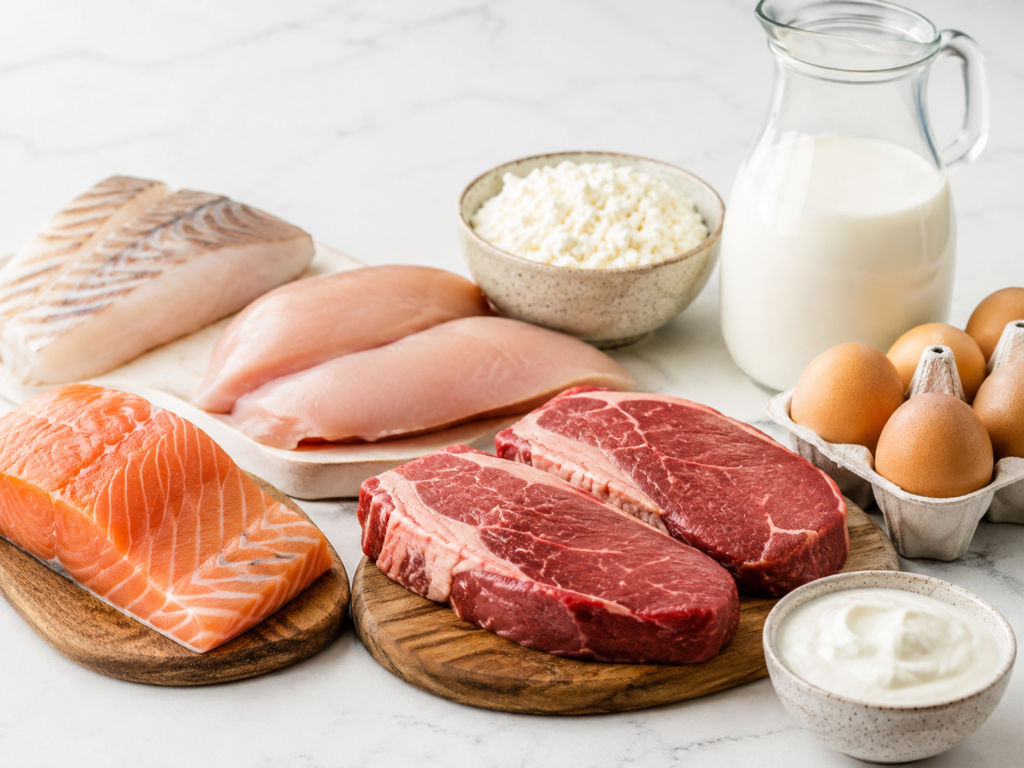
| Food | Protein (per 100 g) | Calories |
|---|---|---|
| Chicken Breast | 23 g | 110 |
| Turkey Breast | 23 g | 104 |
| Lean Beef | 21 g | 127 |
| Salmon | 20 g | 208 |
| Tuna | 24 g | 109 |
| Eggs | 13 g | 143 |
Nutritional values are approximate and may vary slightly depending on the brand, preparation method and product variety.
Plant-Based Protein Sources
Plant-based protein foods are rich in fiber, vitamins and minerals, making them an important part of a healthy diet. While some plant proteins are lower in certain essential amino acids, eating a variety of sources throughout the day easily provides all the protein your body needs.
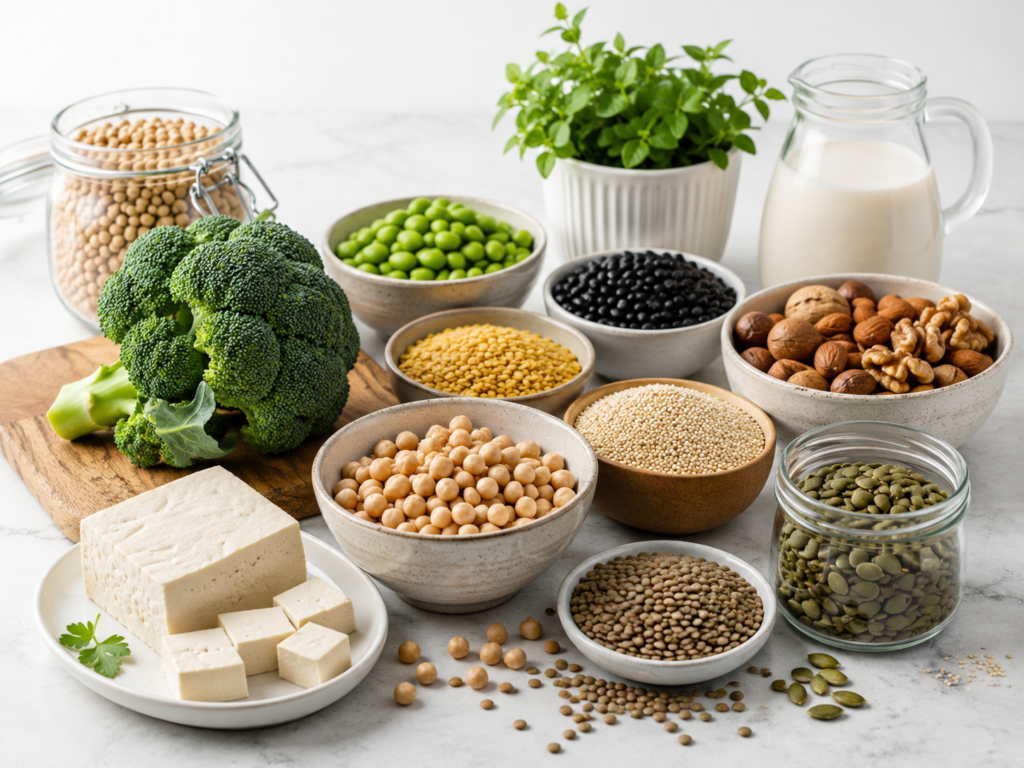
| Food | Protein (per 100 g) | Calories |
|---|---|---|
| Lentils (cooked) | 9 g | 116 |
| Chickpeas | 9 g | 164 |
| Black Beans | 9 g | 132 |
| Edamame | 12 g | 121 |
| Tofu | 17 g | 144 |
| Tempeh | 20 g | 193 |
Nutritional values are approximate and may vary slightly depending on the brand, preparation method and product variety.
Diary Products
Dairy products offer high-quality protein while also providing calcium and other important nutrients. Low-fat options are especially popular among people looking to build muscle or lose fat because they deliver a high protein-to-calorie ratio.
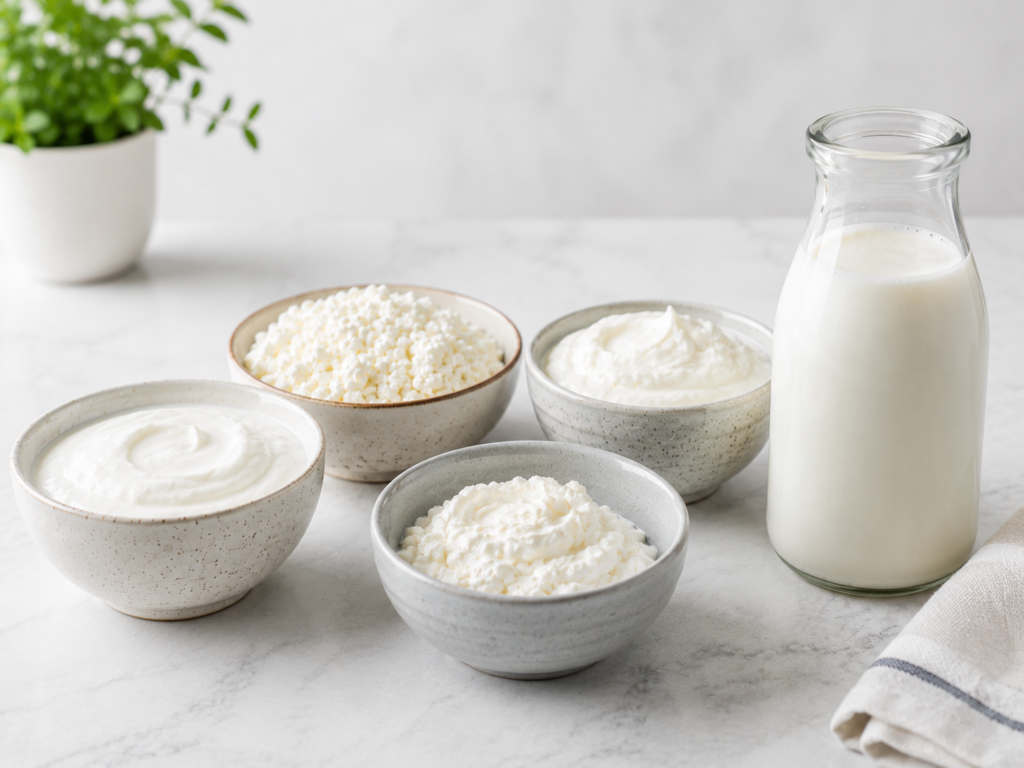
| Food | Protein (per 100 g) | Calories |
|---|---|---|
| Greek Yogurt | 10 g | 59 |
| Cottage Cheese | 11 g | 98 |
| Skyr | 11 g | 63 |
| Low-Fat Quark | 12 g | 67 |
| Milk (Low Fat) | 3.4 g | 47 |
Nutritional values are approximate and may vary slightly depending on the brand, preparation method and product variety.
Protein Supplements
Protein supplements are a convenient way to increase your daily protein intake, especially after training or when whole-food options are limited. However, they should complement—not replace—a balanced diet built around nutrient-rich whole foods.
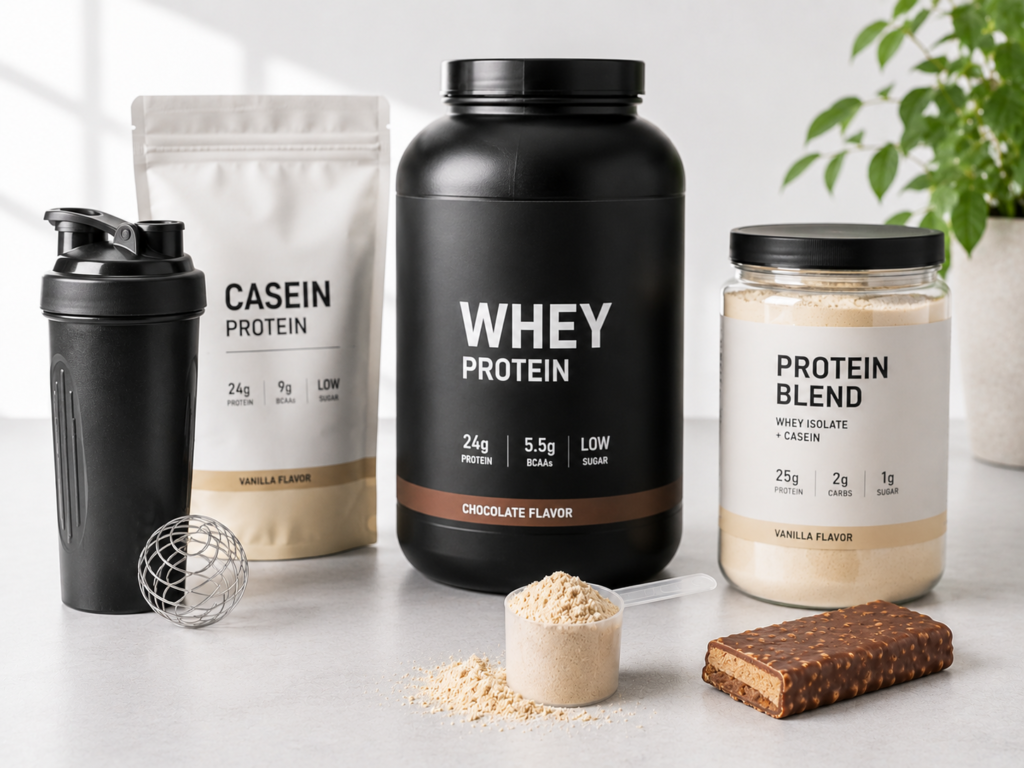
| Supplement | Protein (per 100 g) | Best For |
|---|---|---|
| Whey Protein | 85–90 g | Muscle Growth & Recovery |
| Casein Protein | 78–82 g | Overnight Recovery |
| Plant Protein | 70–80 g | Vegan & Dairy-Free Diets |
Typical serving size: 25–30 g, providing approximately 20–27 g of protein depending on the product.
Quick Takeaway
Whole foods should form the foundation of a high-protein diet. Lean meats, dairy products, eggs, legumes and soy-based foods provide excellent nutrition, while protein supplements offer a convenient way to meet your daily protein goals when needed.
High-Protein Meal Ideas
Eating enough protein doesn’t have to be complicated. By including a quality protein source in every meal, you can easily reach your daily protein target while enjoying balanced, satisfying foods.
The best high-protein meals combine lean protein with fiber-rich carbohydrates, healthy fats and plenty of vegetables. This approach supports muscle growth, recovery and long-lasting energy while making meals both nutritious and enjoyable.
Whether you’re looking for a quick breakfast, a simple lunch or a post-workout dinner, the ideas below can help you build meals that fit your goals.
High-Protein Breakfast Ideas
Starting your day with a protein-rich breakfast can help increase satiety, support muscle maintenance and provide steady energy throughout the morning.
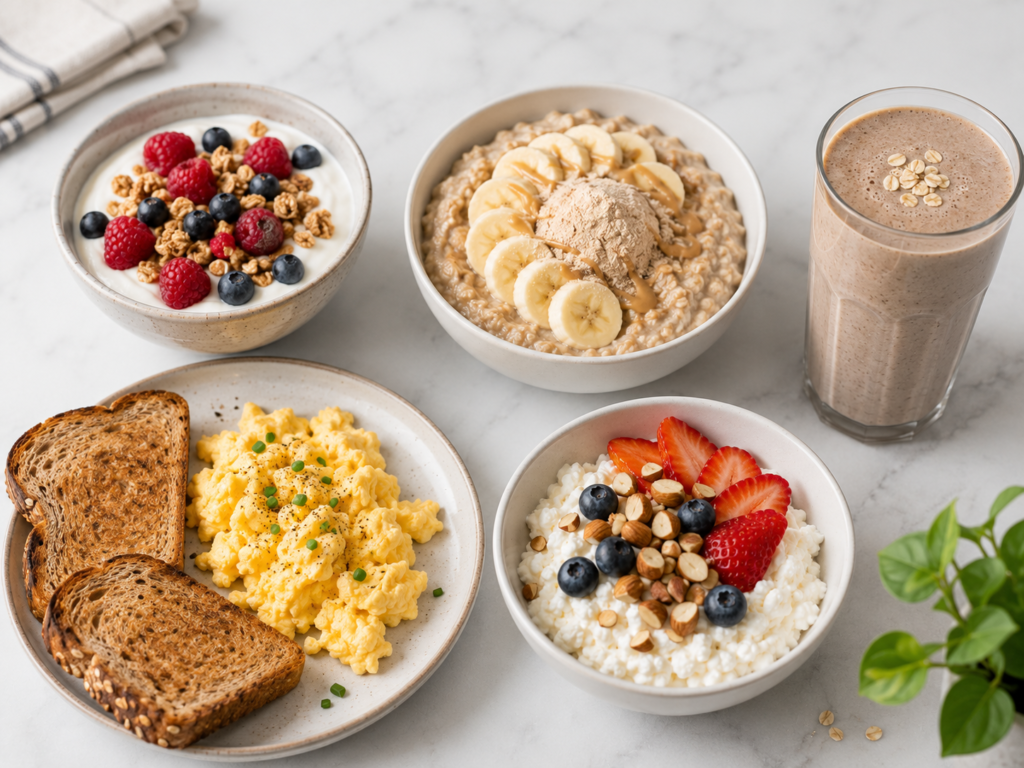
Examples include:
- Protein oatmeal with whey protein and banana
- Scrambled eggs with whole-grain toast
- Cottage cheese with fruit and nuts
- High-protein smoothie with milk, whey and oats
- Greek yogurt with berries and granola
High-Protein Lunch Ideas
Lunch should provide a balanced combination of protein, carbohydrates and vegetables to fuel the rest of your day and support recovery after training.
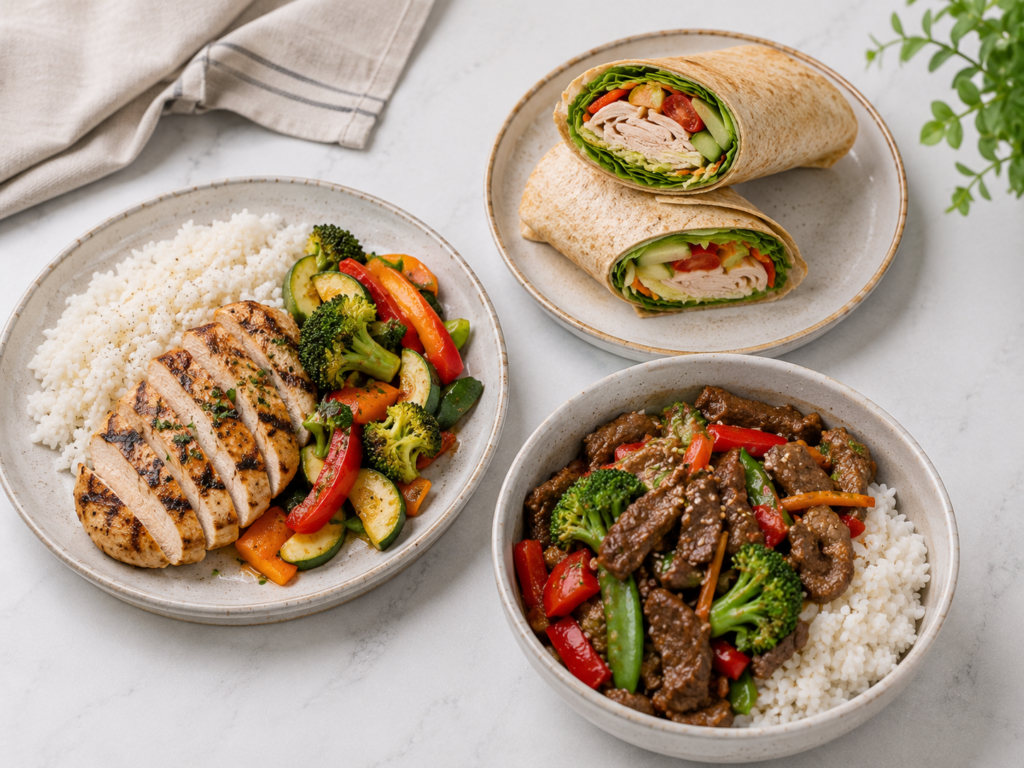
Examples include:
- Beef stir-fry with vegetables and rice
- Lentil and quinoa bowl
- Tuna pasta salad
- Grilled chicken with rice and vegetables
- Turkey wrap with salad
High-Protein Dinner Ideas
Dinner is an excellent opportunity to consume another substantial serving of protein while enjoying a balanced meal with vegetables and healthy carbohydrates.
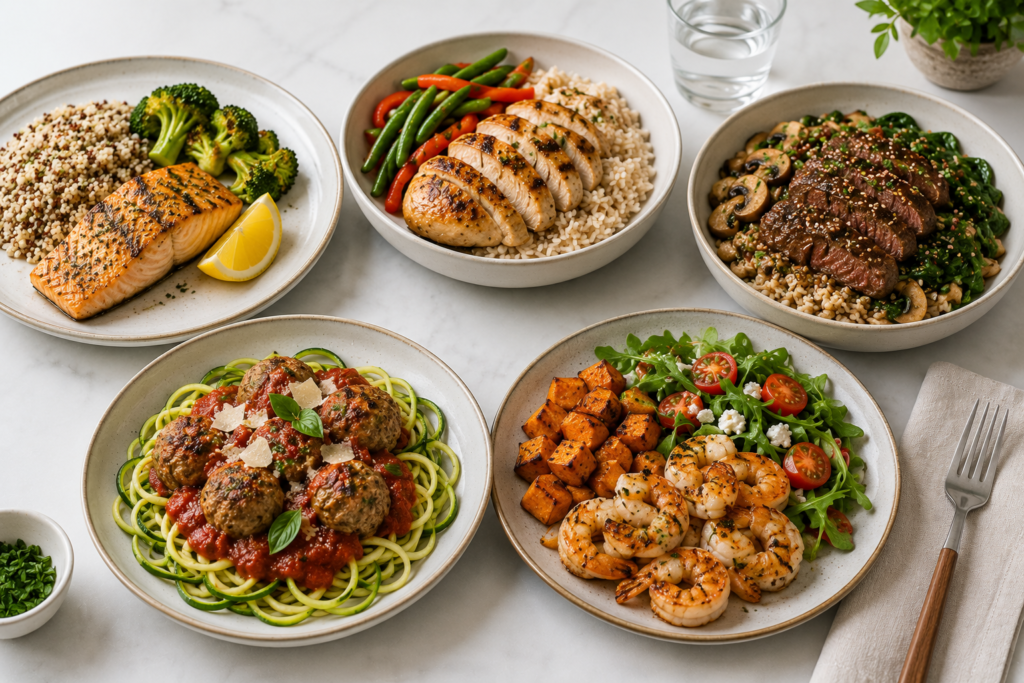
Examples include:
- Chicken breast with quinoa and roasted vegetables
- Turkey chili with beans
- Tofu stir-fry with brown rice
- Baked salmon with potatoes and broccoli
- Lean beef with sweet potato and green beans
High-Protein Snack Ideas
High-protein snacks are an easy way to increase your daily protein intake between meals while helping control hunger.
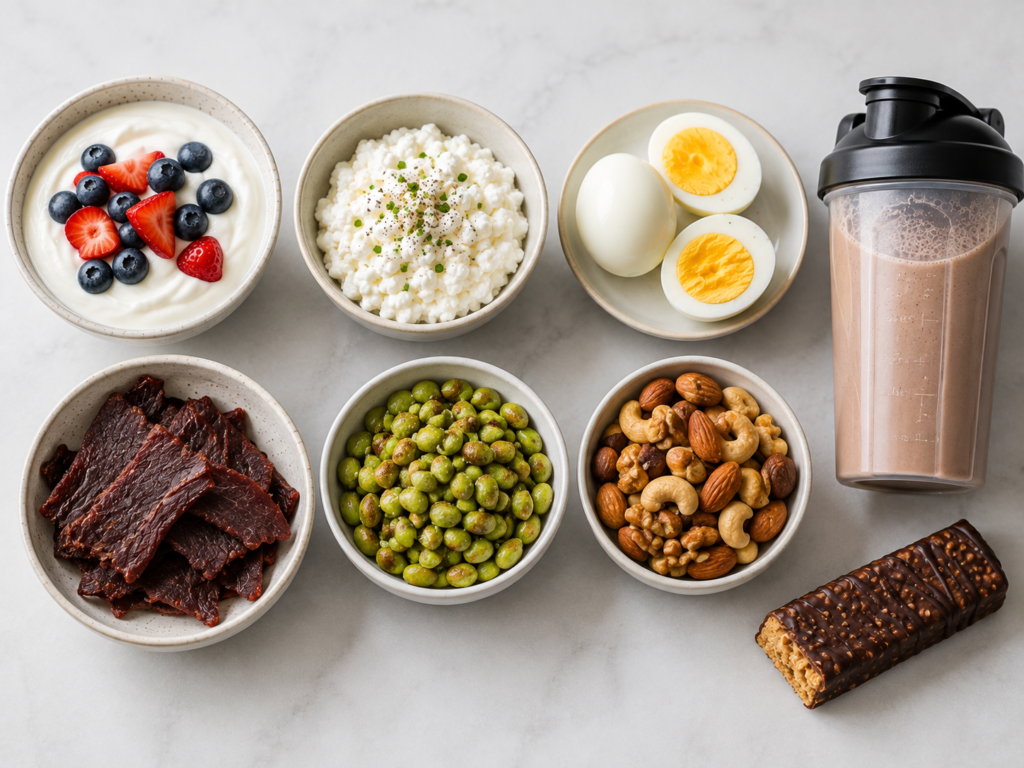
Examples include:
- Greek yogurt
- Cottage cheese
- Hard-boiled eggs
- Protein shake
- Beef jerky
- Roasted edamame
- Mixed nuts
- Protein bars
Quick Tips for Building High-Protein Meals
Quick Takeaway
Every meal is an opportunity to reach your daily protein target. Building meals around high-quality protein sources makes it easier to support muscle growth, recovery and overall health while staying full and satisfied.
High-Protein Meal Prep Tips
Meal prepping is one of the easiest ways to stay consistent with a high-protein diet. Preparing meals in advance saves time, reduces the temptation to make unhealthy food choices and makes it much easier to reach your daily protein target.
Whether you’re preparing meals for a busy workweek or planning your post-workout nutrition, a few simple strategies can help you stay organized while enjoying fresh, nutritious meals every day.
Plan Your Meals in Advance
Start by deciding how many meals you need for the week and choose recipes that are simple to prepare in larger batches. Creating a shopping list before heading to the grocery store also helps reduce food waste and ensures you have all the ingredients you need.
Cook Protein in Bulk
Preparing larger portions of protein at once is one of the biggest time-saving strategies. Grilled chicken breast, lean ground turkey, boiled eggs, baked tofu or cooked lentils can be stored in the refrigerator and used in different meals throughout the week.
Store Meals Properly
Use airtight meal prep containers and refrigerate meals as soon as they have cooled. Most cooked meals stay fresh for 3–4 days in the refrigerator, while many protein-rich meals can also be frozen for longer storage.
Labeling containers with the preparation date helps maintain freshness and food safety.
Keep Meals Balanced
A successful meal prep plan includes more than just protein. Pair your protein source with complex carbohydrates, vegetables and healthy fats to create meals that provide lasting energy and keep you feeling satisfied.
A simple formula works well for most meals:
- 🥩 Lean Protein
- 🌾 Complex Carbohydrates
- 🥦 Vegetables
- 🥑 Healthy Fats
Quick Meal Prep Tips
Quick Takeaway
Meal prep removes guesswork from healthy eating. Preparing protein-rich meals in advance makes it easier to stay consistent, save time and reach your nutrition goals throughout the week.
Common High-Protein Diet Mistakes
A high-protein diet can support muscle growth, fat loss and overall health—but only when it’s implemented correctly. Many people focus solely on increasing their protein intake while overlooking other important aspects of a balanced diet.
Avoiding the common mistakes below will help you get the most from your high-protein eating plan and build habits that are both effective and sustainable.
Focusing Only on Protein
While protein is essential, it shouldn’t replace other important nutrients. A balanced diet should also include complex carbohydrates, healthy fats, fiber, vitamins and minerals to support energy levels, recovery and long-term health.
Eating Too Little Protein
Many active people underestimate how much protein they actually need. Consistently falling short of your daily protein target may limit muscle growth, slow recovery and make it harder to preserve lean muscle during fat loss.
Relying Too Much on Protein Supplements
Protein powders are convenient, but they should supplement—not replace—a balanced diet. Whole foods provide additional nutrients such as vitamins, minerals and fiber that protein shakes alone cannot offer.
Ignoring Total Calorie Intake
Protein is important, but overall calorie intake still determines whether you gain, lose or maintain body weight. Even a high-protein diet can lead to weight gain if you consistently consume more calories than your body needs.
Not Drinking Enough Water
Increasing your protein intake may also increase your fluid needs, especially if you’re physically active. Staying well hydrated supports digestion, exercise performance and overall health.
Quick Tips
Quick Takeaway
A successful high-protein diet isn’t just about eating more protein—it’s about building balanced, sustainable habits that support your fitness goals and overall health.
Frequently Asked Questions
Final Thoughts
A high-protein diet doesn’t have to be complicated. By choosing quality protein sources, eating balanced meals and consistently meeting your daily protein needs, you can support muscle growth, improve recovery, promote fat loss and maintain your overall health.
Remember that there is no single „perfect“ diet. The best approach is one that fits your lifestyle, food preferences and long-term goals. Focus on building sustainable habits, preparing nutritious meals and making gradual improvements over time rather than chasing perfection.
Whether you’re just getting started or looking to optimize your nutrition, this guide provides the foundation you need to build a healthier, higher-protein diet with confidence.
7-Day High-Protein Meal Plan
A complete 7-day meal plan with high-protein recipes, shopping list and meal prep tips.
Related Guides
Best High-Protein Foods
Discover the best high-protein foods, compare protein sources and choose the healthiest options for your fitness goals.